

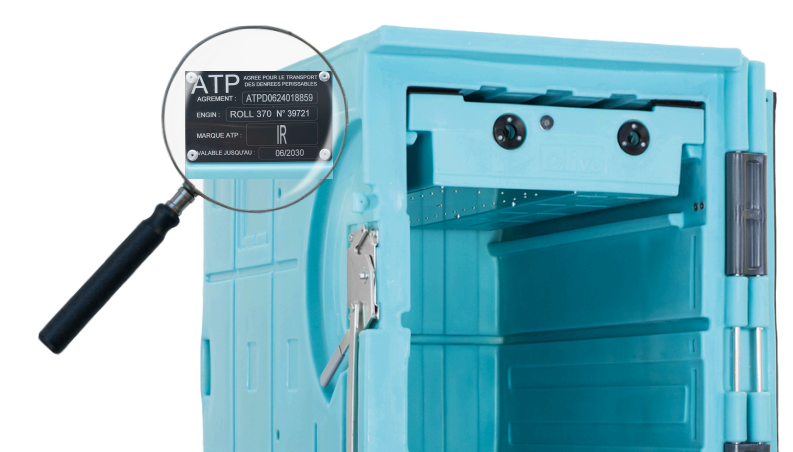
ATP renewal for your insulated containers: what every logistics manager needs to know to remain compliant
2 July 2026 by Edina GÁLFI
26 February 2026 by Edina GÁLFI
In many organizations, the choice of an insulated container supplier is still approached as just another technical decision. The container is selected, integrated into operational flows, and then quickly relegated to the status of standard equipment, rarely questioned as long as it “works.”
However, this perspective is evolving. Driven by stricter health requirements, tighter regulatory standards, and increasing pressure on logistics costs, the insulated container is gradually emerging as a critical link in the cold chain. Not merely because of its presence, but because of the impact it has on overall performance.
This raises a fundamental distinction: are you working with a simple insulated container supplier, or with a partner capable of sustainably supporting your cold chain logistics?
An insulated container is not a passive piece of equipment from an organizational standpoint. It is handled, moved, opened, cleaned, stacked. It passes through various environments, warehouses, loading docks, trucks, intermediate storage areas, and is exposed to repeated stress.
As such, it directly influences:
These effects are not immediately measurable at the time of purchase. They reveal themselves over time, often gradually, sometimes when an audit, product loss, or operational disruption highlights their limitations.

INFORMATIONS
Are you hesitating between several insulated container solutions ?
Talk to an Olivo expert to analyze your current use and operational issues.

On a quotation, the difference between two offers may seem marginal.
In the field, it becomes far more tangible.
An insulated container supplier focuses on the conformity of the delivered product.
A cold chain logistics partner pays closer attention to real operating conditions: rotation frequency, daily usage duration, cleaning constraints, quality requirements, evolving flows.
This approach is not immediately visible. It becomes evident when usage becomes more complex, when volumes increase, or when performance must remain stable over time without multiplying corrective adjustments.
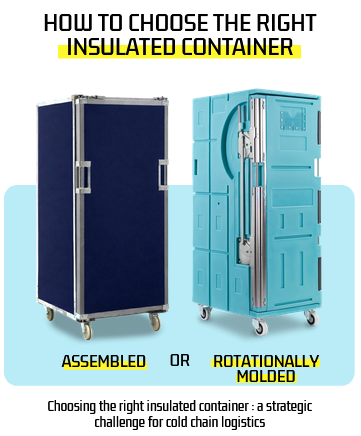
Assembled or rotationally molded: the issue is often framed as a binary choice.
In reality, it is more nuanced.
A technology is never absolutely performant. It performs within a given context, for a specific use case. Certain differences, regarding thermal stability, hygiene, or durability, only become perceptible after several months of operation, when the equipment is confronted with real-world conditions.
This is where support becomes meaningful. Not to promote a single solution, but to help align technical choices with actual operational use.
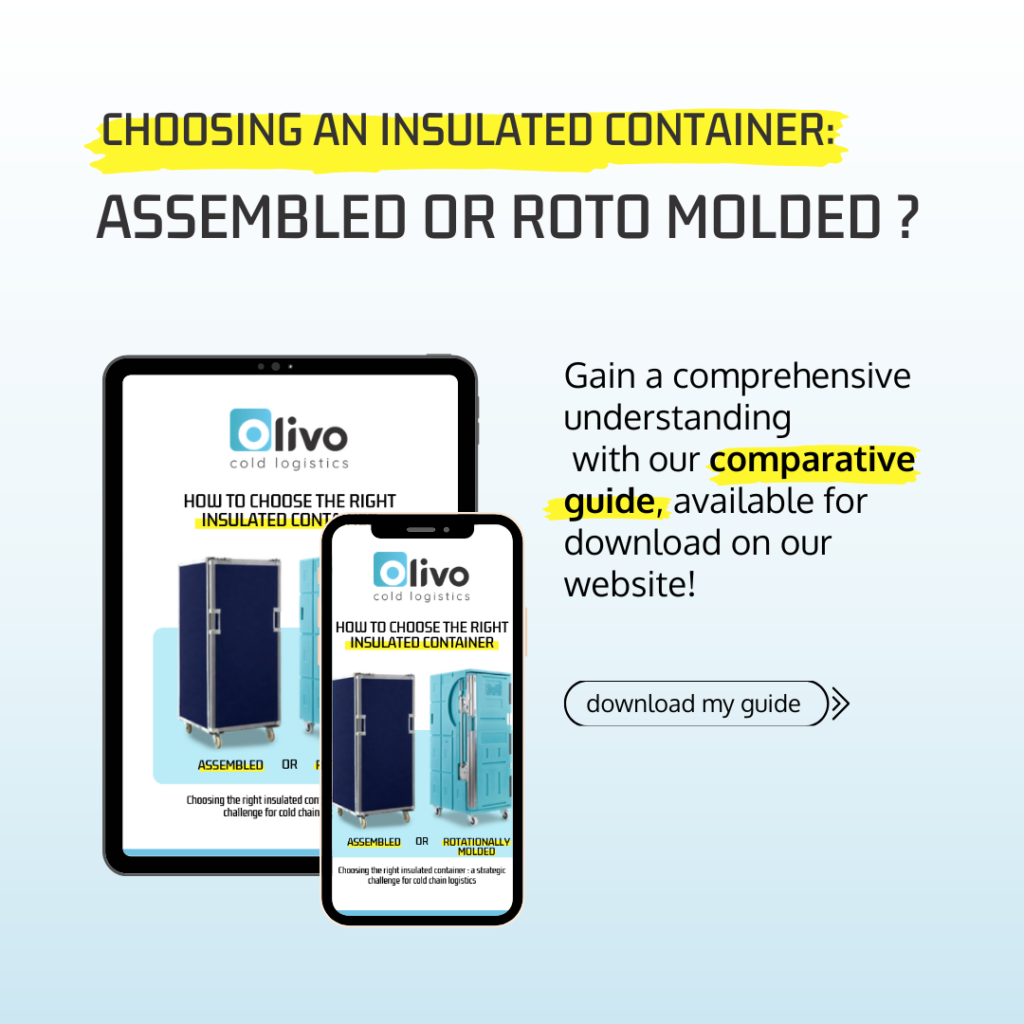
To support this reflection, a benchmark study offers a comparative analysis of insulated container technologies, based on logistics use cases and field constraints.
Total Cost of Ownership (TCO) remains underutilized in equipment decision-making. Yet it is one of the few indicators capable of revealing diffuse costs: product loss, operational time, maintenance, actual lifespan, and end-of-life management.
These elements do not appear immediately. They gradually accumulate, sometimes silently, until they become structurally significant. Here again, the difference between supplier and partner lies in the ability to anticipate these effects rather than observe them after the fact.
In cold chain logistics, performance is not declared at commissioning. It is built over time, through consistency between equipment, operational use, and organizational objectives.
This is why some companies no longer seek merely an insulated container supplier, but a counterpart capable of taking a critical look at their practices, asking the right questions, and shedding light on structuring decisions.
For those wishing to deepen this reflection, it can be useful to rely on comparative analyses and feedback to better understand the long-term challenges related to usage, hygiene, and total cost.
ADDITIONAL RESOURCES – Choosing the right insulated container
To go further, an independent benchmark provides a detailed review of the criteria to consider when choosing an insulated container, in connection with real-world usage and operational constraints.
Do you need more information or would you like to talk to our teams about your project ?

ZA Charles Chana
1 boulevard des Mineurs – CS 50019
42230 Roche-la-Molière

Tel : +33 (0)4 77 90 68 63
2 July 2026 by Edina GÁLFI
5 May 2026 by Edina GÁLFI
26 February 2026 by Edina GÁLFI