

Delivering multi-temperature goods using a standard truck : how Colruyt met the challenge with Olivo
19 March 2026 by Edina GÁLFI
7 April 2026 by Edina GÁLFI
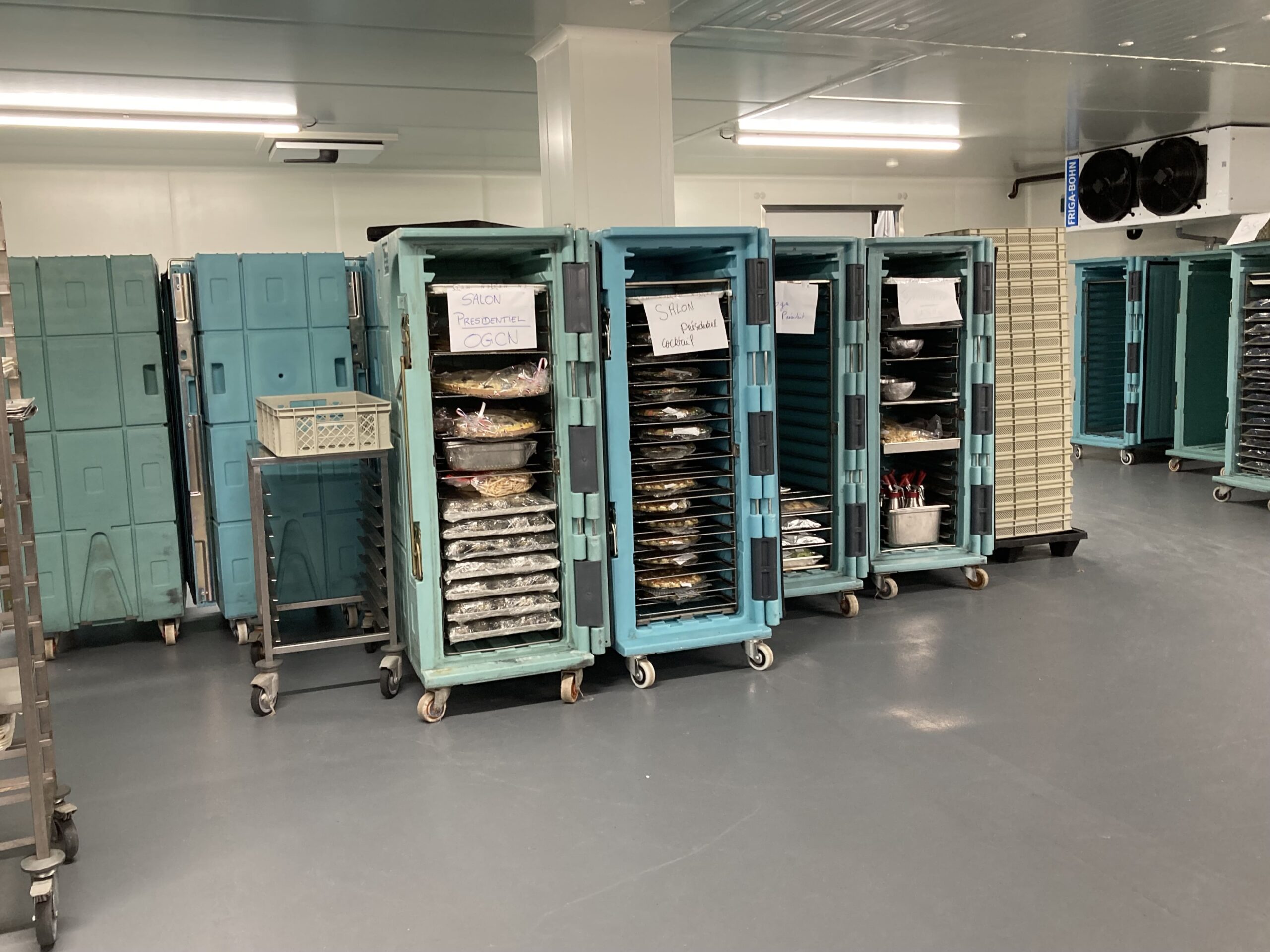
The central kitchen as a logistics operation in its own right
A central kitchen is far more than an industrial-scale meal production unit. It sits at the heart of a complex logistics system that must ensure, every day, that meals meeting the strictest health and safety standards are delivered to dozens, or even hundreds, of satellite sites such as schools, daycare centres, nursing homes, hospitals and businesses.
For a transport director or logistics manager working in a central kitchen, keeping the cold chain under control is the most critical day-to-day operational issue. In this environment, a break in the cold chain is not measured only in financial losses. It can also have serious health consequences for vulnerable groups, including very young children, elderly people and hospital patients, while exposing the operator to severe regulatory sanctions and, in some cases, criminal proceedings.
This article offers a full overview of the logistics challenges faced by central kitchens and institutional catering operators, together with practical solutions for making the cold chain safer and more efficient.
The logistics of a central kitchen are defined by extremely tight timing constraints. Meals have to be prepared, packed, distributed and consumed within very specific time windows determined by the schedules of the sites being served, whether that means school lunch hours, care service timetables or other operational requirements.
These time constraints go hand in hand with strict temperature requirements, depending on the type of distribution model in use.
Each of these distribution methods requires dedicated equipment and logistics procedures that are documented with great care.
Central kitchens are exposed to major and often predictable changes in volume. School holidays can lead to a sharp drop in output, the Christmas period can create a peak for corporate catering, and unexpected events can suddenly drive demand upwards. These fluctuations require a flexible logistics organization capable of adapting quickly without compromising the quality and reliability of the cold chain.
A medium-sized central kitchen may serve anywhere from 20 to 200 satellite sites. Planning delivery rounds, sizing the fleet of vehicles and insulated equipment, and organizing the return of containers such as gastronorm pans and delivery trolleys are all permanent logistics challenges that call for flawless coordination.
This closed-loop logistics model is not unique to central kitchens. Contrary to what is often assumed, the same issue exists in many institutional catering and temperature-controlled food distribution systems. In these operations, equipment is not simply delivered and left with the customer. Instead, everything functions as part of a closed-loop system in which each container has to be collected, cleaned, checked and put back into service for the next delivery cycle.
This operational constraint means return flows have to be managed just as carefully as outbound deliveries, with major implications for traceability, hygiene and equipment availability. Any disruption in this chain, whether it is a delay in returns, poor cleaning or lost equipment, can have a direct impact on the operator’s ability to carry out the next delivery round under compliant conditions.
Managing reusable containers therefore becomes a key driver of logistics performance, just as important as route planning or maintaining the cold chain itself. It requires accurate tracking tools, standardized procedures and close coordination between production, transport and receiving teams.
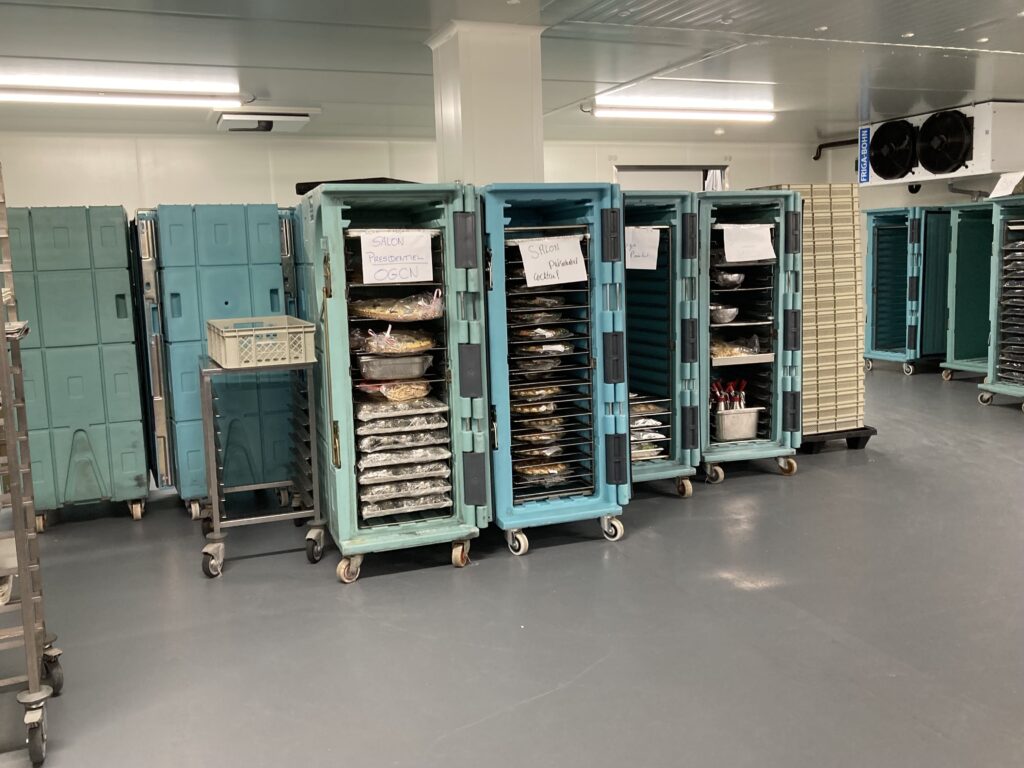
The European food hygiene framework, commonly known as the Hygiene Package, includes a number of regulations that apply directly to central kitchens.
In France, these European rules are supplemented by the Order of 21 December 2009 on the health rules applicable to retail activities, storage and transport of food products and animal feed. Among other things, this text specifies the maximum permitted temperatures for each category of product.
| Products category | Storage and transport temperature |
| Minced meat and products made from minced meat | ≤ +2°C |
| Fresh meat (beef, veal, lamb and pork) | ≤ +4°C |
| Chilled prepared meals (cold chain) | 0°C à +3°C |
| Fresh fish products | ≤ +2°C |
| Fresh dairy products | ≤ +4°C |
| Frozen goods | ≤ -18°C |
| Meals (hot holding systems) | ≥ +63°C |
These temperatures must be maintained from the moment products leave production right through to service. Any temperature deviation has to be documented and followed by immediate corrective action.
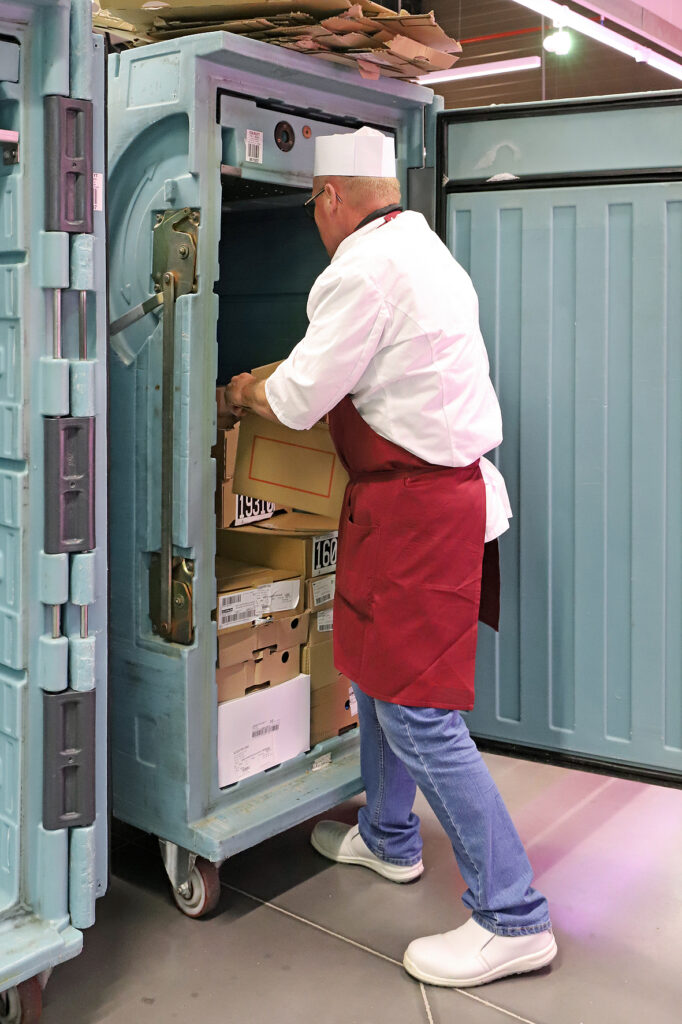
Temperature traceability across the entire logistics chain is a regulatory obligation for central kitchens. In practical terms, this means :
Modern temperature monitoring systems now make it possible to automate much of this traceability, significantly reducing the administrative burden that used to fall on logistics teams.
In central kitchens operating chilled distribution systems, the insulated roll container is the standard piece of equipment for meal delivery. It offers several decisive advantages in this setting.
First, it provides high loading capacity. A standard insulated roll container can hold a large number of stacked gastronorm pans, which helps maximize the usable volume of each delivery. It also offers strong thermal autonomy. When fitted with eutectic plates that have been recharged in a cold room, a high-quality insulated roll container can keep products between 0°C and +3°C for 12 to 20 hours depending on the configuration, which is more than enough for even the longest rounds.
Beyond thermal performance alone, the use of insulated roll containers fundamentally changes the logistics organization of both central kitchens and satellite kitchens. They can serve as a genuine controlled-temperature buffer zone, making it possible to secure the cold chain without always relying on a cold room on site.
In practice, this means some facility kitchens, especially in healthcare, social care and education, can reduce or even avoid investing in heavy refrigeration infrastructure. In that context, the insulated roll container becomes a key part of the overall system, ensuring temporary storage, internal transport and meal availability while remaining fully compliant with regulatory requirements, particularly those derived from the Hygiene Package and HACCP standards.
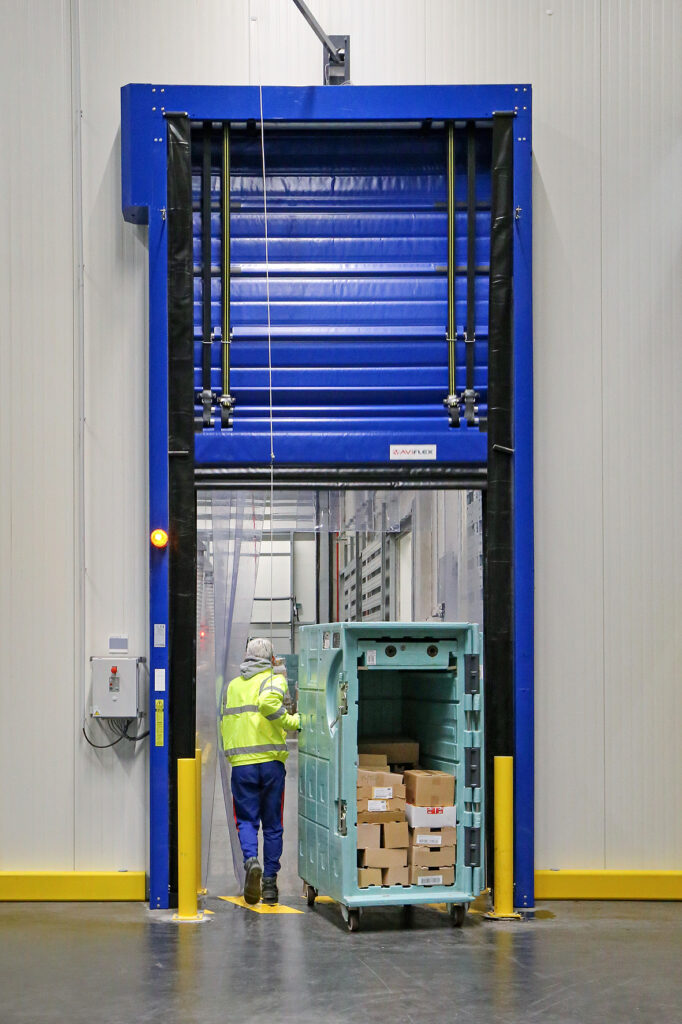
This approach offers a double strategic benefit :
By making the insulated roll container a central logistics solution, institutional catering operators can streamline their flows, strengthen food safety and gain greater agility at the same time.
Mobility is another major advantage. Because the roll container is fitted with wheels, it is easier to handle in the kitchen, during vehicle loading and at the delivery site. This mobility reduces the risk of musculoskeletal disorders for operators and speeds up delivery operations.
Finally, ATP-certified insulated roll containers provide a documented and measurable guarantee of thermal performance, which helps meet regulatory requirements and customer audit expectations.
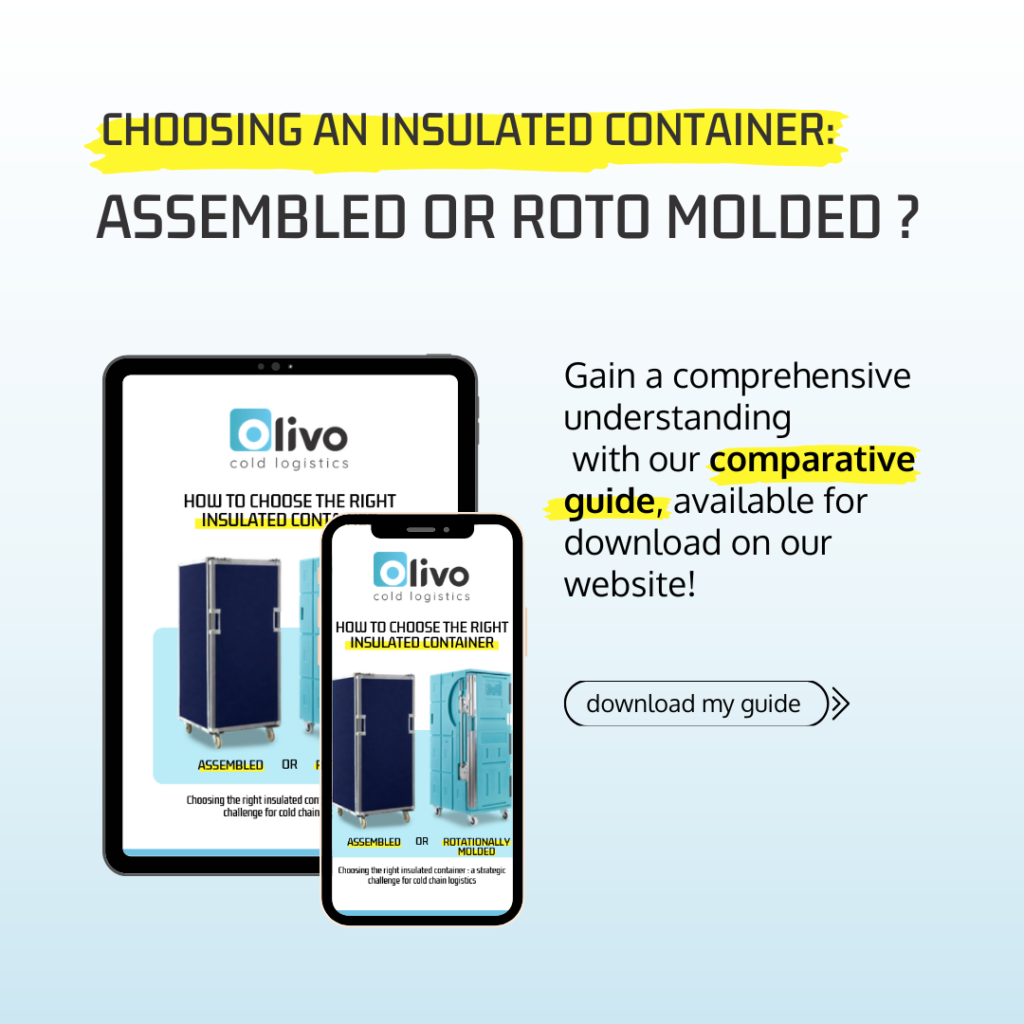
To support this reflection, a benchmark study offers a comparative analysis of insulated container technologies, based on logistics use cases and field constraints.

For central kitchens, eutectic plates are the preferred solution when an autonomous source of cooling is needed. Their operating principle is simple and reliable. After being recharged at low temperature in a cold room for several hours, with a minimum of 24 hours before use, they store cooling energy which they then release gradually and evenly inside the container.
The temperature ranges covered by eutectic plates can be adjusted depending on the composition of the mixture used. A eutectic plate with a melting point of +4°C is ideal for meals distributed through the chilled chain, whereas a plate designed for -18°C is suitable for transporting frozen products.
Managing the fleet of insulated roll containers, bins and eutectic plates in a central kitchen is a major operational issue that directly affects the smooth running of daily activities. An insulated roll container that is out of service for maintenance, a missing eutectic plate on the morning of departure, or a gastronorm pan that was not collected from a customer can all disrupt deliveries and create tension with the sites being served.
Best practice includes :
Optimizing delivery rounds for a central kitchen relies on several complementary levers.
The return of containers, including empty roll containers, gastronorm pans and depleted eutectic plates, is a logistics flow in its own right and needs to be planned and managed with the same level of discipline as outbound deliveries. Best practice includes :
Logistics management tools now make it possible to digitalize and optimize the full distribution chain of a central kitchen.
INFORMATIONS
Are you hesitating between several insulated container solutions ?
Talk to an Olivo expert to analyze your current use and operational issues.
Let us imagine a school catering central kitchen serving 100 sites within a radius of 50 kilometres. It operates a chilled distribution model and delivers lunch meals every morning, as well as evening meals for residences and facilities that also serve dinner.
The challenge is to deliver to 100 sites within tight time windows, before 10:30 a.m. for schools, while keeping meals between 0°C and +3°C throughout the distribution process, using five vehicles and 40 insulated roll containers.
The solution would involve recharging eutectic plates as soon as production ends and keeping them in the cold room for 24 hours, which means planning a full rotation set. Insulated roll containers would be loaded from 5:30 a.m. onwards in a temperature-controlled loading area. Delivery rounds would be sequenced so that the most distant sites are served first. Temperature recorders would be placed in each roll container in order to document conditions throughout the delivery process. Empty roll containers would then be collected during the following morning’s round.
The result would be fully compliant delivery for 100% of the sites served, documented traceability for every round and every meal batch, and controlled logistics costs thanks to the thermal performance of the equipment, which removes the need for active refrigerated vehicles.
Do you need more information or would you like to talk to our teams about your project ?

ZA Charles Chana
1 boulevard des Mineurs – CS 50019
42230 Roche-la-Molière

Tel : +33 (0)4 77 90 68 63
19 March 2026 by Edina GÁLFI
14 October 2025 by Edina GÁLFI
4 June 2025 by Edina GÁLFI