

Respecting the cold chain in foodservice – Everything you need to know
14 October 2025 by Edina GÁLFI
19 March 2026 by Edina GÁLFI
Maintaining the cold chain for 20 hours, supplying 102 stores every day from a single warehouse, without any cold rooms in store and using non-refrigerated trucks — this is the exceptional logistics challenge that Colruyt France successfully tackled with Olivo Cold Logistics. Here is a closer look at a customer case that is reshaping temperature-controlled food distribution.
Colruyt France could have followed the conventional model: refrigerated trucks, cold rooms in store and a traditional logistics setup. Instead, they chose a different path. Inspired by their Belgian model, their approach is clear, deliver every store daily using standard trucks, with no cold infrastructure at the destination.
This decision was driven by energy efficiency and the optimisation of retail space. However, it raises a very practical operational question: how can fresh and frozen products remain at the correct temperature for up to 20 hours, from warehouse picking through to store shelves, without any onboard refrigeration equipment?
That is the challenge they brought to us.
Key figures behind the challenge
From the Choisey warehouse in the Jura region, 102 stores across eastern France receive daily deliveries — five days a week, without exception. Some delivery routes cover up to 350 km, representing around 3 hours and 30 minutes on the road.
Each vehicle carries fresh and frozen products among the 9,000 items offered in every store. Around 2,500 employees depend on this supply chain every day. In this context, a thermal failure simply isn’t an option.
This dense distribution network requires flawless logistics planning. Every store must be supplied within strict delivery windows, with products kept at the correct temperature throughout transport and until they are placed on shelves — even though there is no refrigerated infrastructure on site.

The brief submitted to Olivo was built around three strategic imperatives :
Additional challenges included reducing unnecessary energy consumption, securing products in a non-refrigerated delivery environment, and simplifying handling for operators both in the warehouse and in stores.
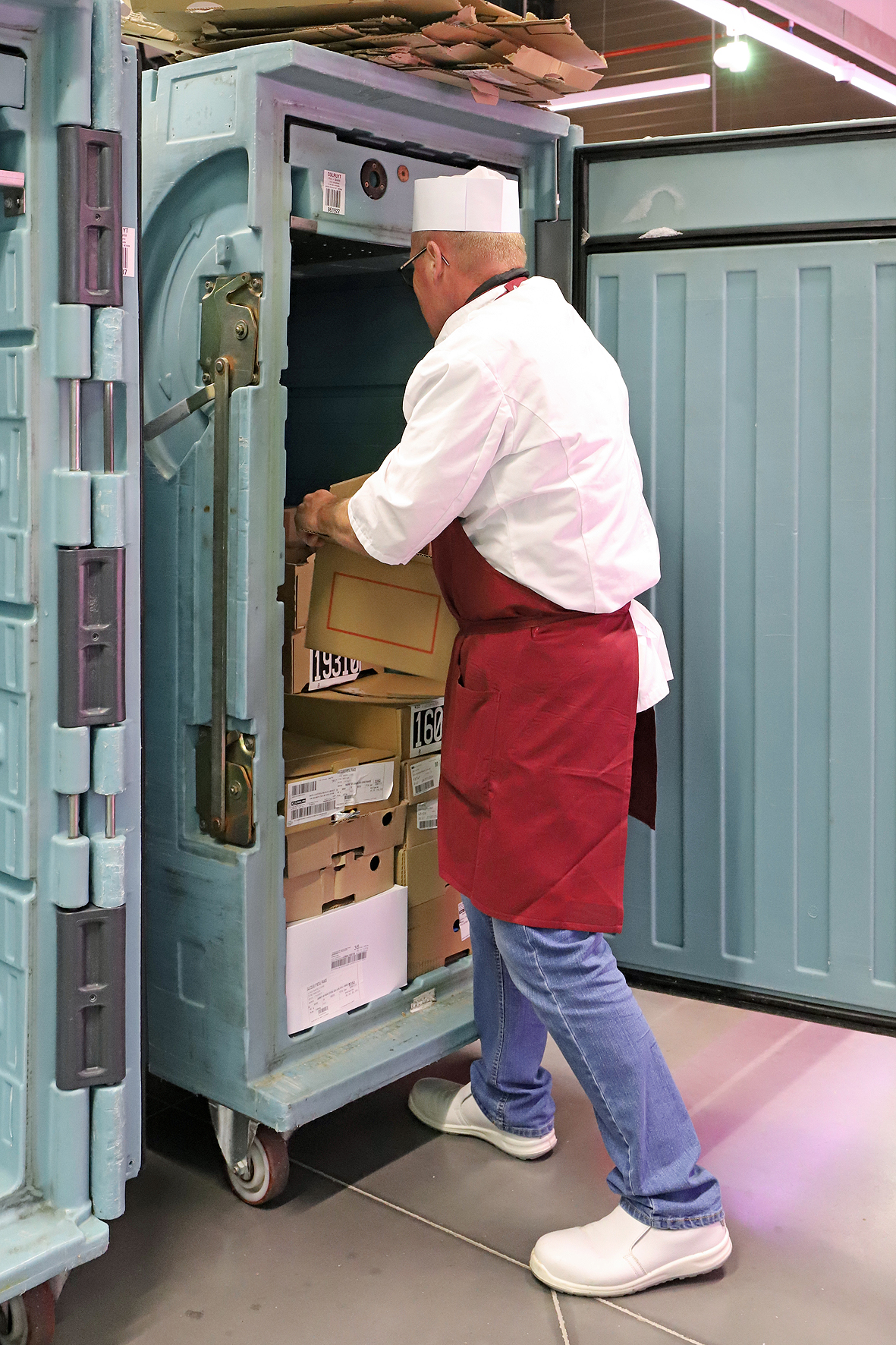
In response to this demanding brief, Olivo Cold Logistics recommended deploying an automated cooling solution: the ROLL 900 SiberSnow® TWIN.
This equipment addresses two major challenges: handling high-volume daily logistics flows and securing temperature control without repeated human intervention.
The ROLL 900 SiberSnow® TWIN is a high-capacity mobile insulated container designed for large-scale retail logistics. Its technical design enables dual-mode operation for fresh and frozen goods (TWIN mode).
A single container model can therefore handle two different temperature ranges, simplifying fleet management, ordering and distribution.
At the heart of the solution lies an automated injection tower equipped with integrated software. Its objectives are threefold :
The system also offers strong financial visibility. Through detailed monthly reporting, Colruyt has a complete overview of cooling consumption and associated costs.
La solution Olivo s’intègre dans un processus logistique en quatre étapes, optimisé pour garantir la continuité de la chaîne du froid sur l’ensemble de la séquence.
Step 1 — Warehouse preparation
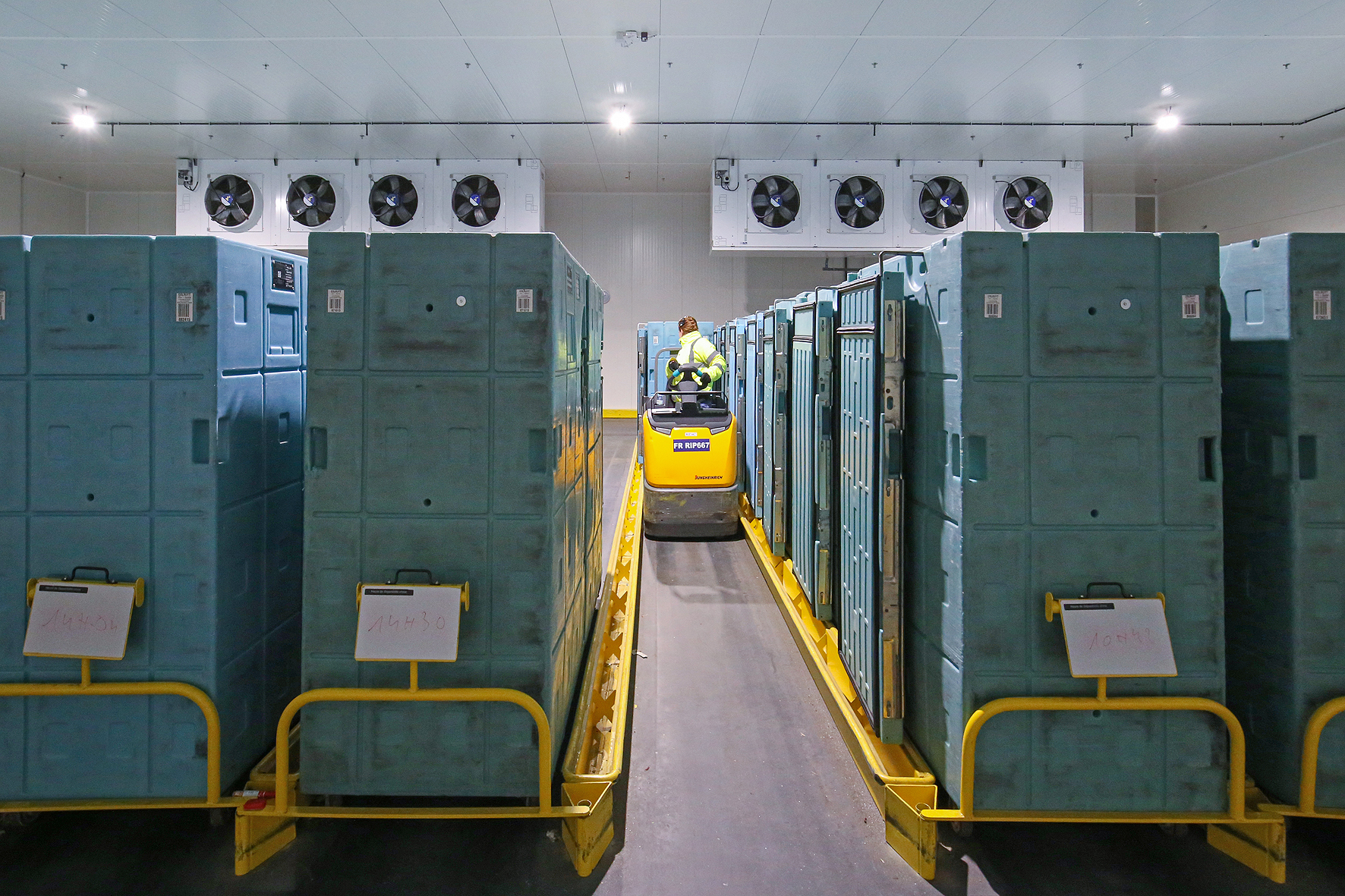
ROLL containers are stored in a dedicated area within the return centre. Before loading, they are placed in a pre-conditioning area at 0°C for 2 hours and 40 minutes to thermally saturate the insulated walls. They are then loaded with goods in a +3°C zone before being equipped with their cooling source via SiberSnow® injection.
Step 2 — Loading and transit
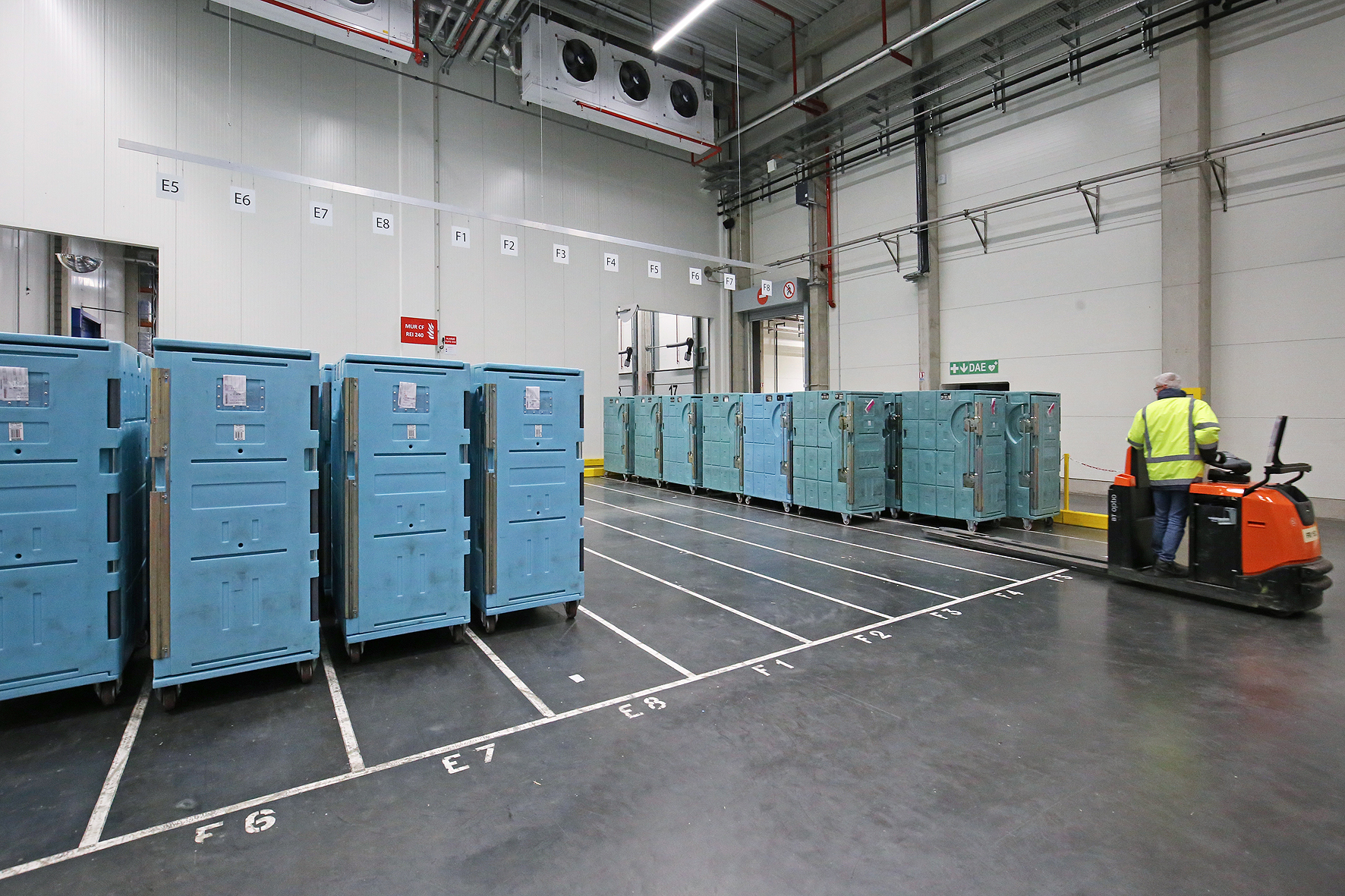
The containers are placed in the dispatch area and remain at the loading dock before departure. Each day, around 500 insulated containers for fresh products and 100 containers for frozen products are shipped to stores.
Step 3 — Delivery and in-store management
For example, in the Saint-Étienne store, containers are received between 5:00 and 7:30 a.m. They are stored in the backroom at ambient temperature, with butcher containers placed directly on shelves. Shelf stocking is completed by 11:00 a.m.
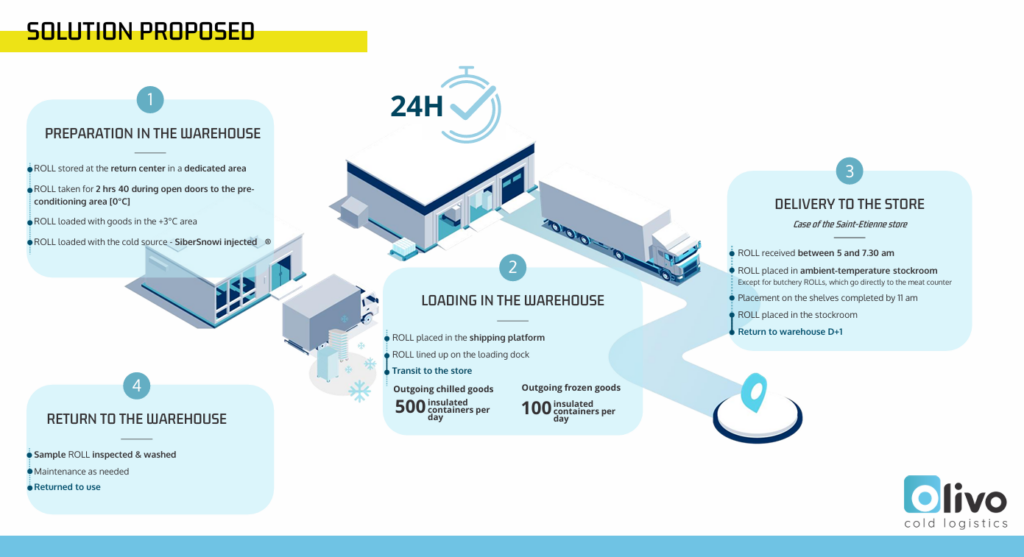
Step 4 — Return and recirculation
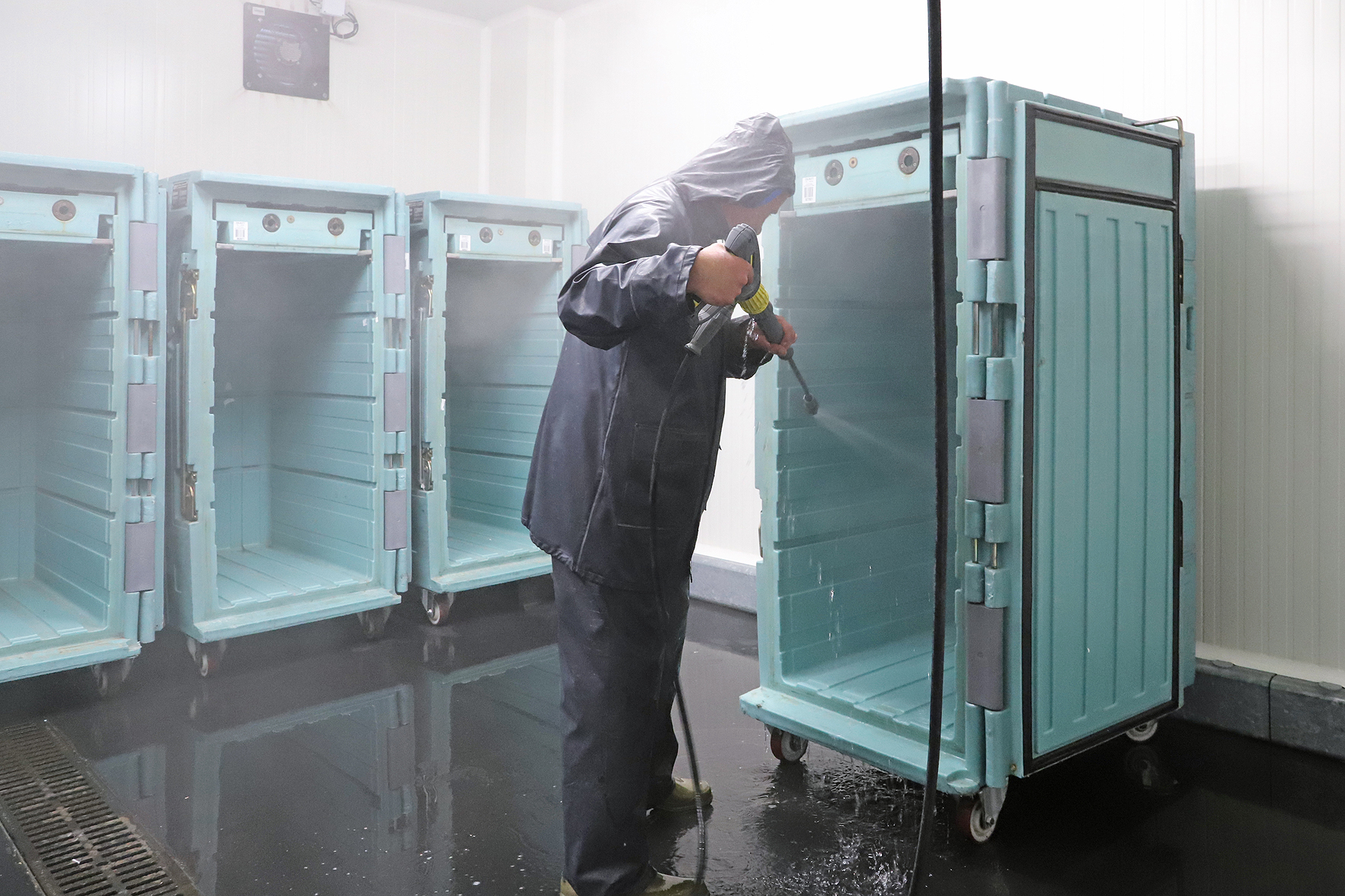
Once back at the warehouse, a sample of containers is inspected and cleaned. Maintenance operations are carried out if necessary before they are returned to the logistics cycle.

Before any large-scale deployment, Olivo first tested the solution in laboratory conditions to confirm thermal performance. The containers were then tested in real operating conditions on Colruyt delivery routes.
Following these two phases, Colruyt validated the recommendations, confirming temperature stability for 20 consecutive hours in a non-refrigerated environment.
Before any large-scale deployment, Olivo first tested the solution in laboratory conditions to confirm thermal performance. The containers were then tested in real operating conditions on Colruyt delivery routes.
Following these two phases, Colruyt validated the recommendations, confirming temperature stability for 20 consecutive hours in a non-refrigerated environment.
By getting rid of in-store cold rooms and refrigerated trucks, Colruyt makes significant savings on both infrastructure and operating costs. The Olivo solution moves the cooling function from the building and the vehicle to the container itself, a very different and much more flexible approach.
For a logistics or quality manager, maintaining the cold chain is a top priority. The ROLL 900 SiberSnow® TWIN meets this need by providing up to 20 hours of cooling, whatever the outside conditions, transit time, or delivery setup.
The solution used by Colruyt is not a one-off prototype or a custom setup that can’t be replicated. It’s part of a standardized product range, with an automated filling station, control software, and monthly reporting. In other words, it’s a scalable, trackable model that can be improved over time.
By automating the cooling process and reducing manual handling, Olivo helps lower the risk of human error, the main cause of temperature-related issues. For quality and transport teams, this means an extra layer of assurance when it comes to meeting regulatory requirements.
Beyond the Colruyt case, this project highlights several key trends reshaping refrigerated logistics in Europe:
These trends position companies like Olivo Cold Logistics at the heart of the transformation of the food supply chain — no longer just as equipment suppliers, but as true partners in operational performance.
Do you need more information or would you like to talk to our teams about your project ?

ZA Charles Chana
1 boulevard des Mineurs – CS 50019
42230 Roche-la-Molière

Tel : +33 (0)4 77 90 68 63