

How do you get the best value for money in a professional insulated container ?
1 October 2026 by Edina GÁLFI
2 July 2026 by Edina GÁLFI
ATP, the regulatory requirement that affects the entire cold chain logistics sector
Among the regulations governing the transport of perishable food products, the Agreement on the International Carriage of Perishable Foodstuffs (ATP) is undoubtedly one of the least known by logistics teams. Yet it is also one of the most demanding in practical terms. If you are a logistics manager, warehouse manager or buyer responsible for managing a fleet of insulated containers, it is essential to understand ATP renewal requirements. Otherwise, you risk finding yourself in a situation of non-compliance, with potentially serious consequences.
In this article, we review what ATP certification is, why its renewal is critical, how to anticipate it effectively and what solutions are available for food distribution professionals.
The Agreement on the International Carriage of Perishable Foodstuffs (ATP) is an international treaty signed in Geneva on September 1st, 1970, under the auspices of the United Nations Economic Commission for Europe (UNECE). It entered into force on November 21st, 1976 and has been regularly updated since then to keep pace with technological developments and logistics practices.
In practical terms, ATP applies to all road transport of perishable foodstuffs whenever loading or unloading operations take place within the territory of at least one signatory state (including France). It concerns equipment specifically designed to transport food products under temperature-controlled conditions.
ATP certification applies to several types of temperature-controlled transport equipment:
This last point often comes as a surprise to operators who believed ATP certification only applied to vehicles. However, insulated roll containers, bins and boxes used in large-scale retail, wholesale distribution and institutional catering are indeed subject to ATP requirements and must hold a valid certification.
ATP defines several performance classes according to the equipment’s ability to maintain a temperature differential between the inside and the outside:
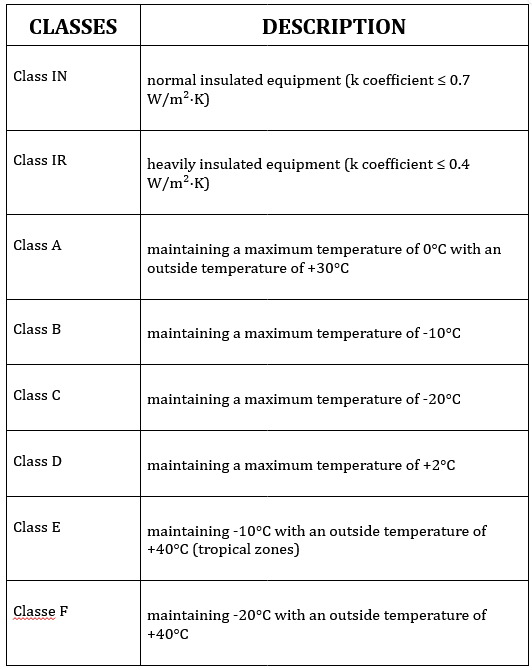
For a food wholesaler or central kitchen delivering chilled products, Classes D or FRC (Reinforced Refrigerated Class C) are generally the most suitable.
The initial ATP certification of insulated equipment is valid for six years. Midway through this period, after three years, the equipment must undergo an intermediate inspection to confirm that its thermal performance remains compliant.
This six-year cycle with a three-year inspection applies to new equipment. However, for equipment that has already undergone one renewal, the certification validity period becomes renewable every three years.
In practical terms, this means that the logistics manager responsible for a fleet of insulated containers must maintain an up-to-date tracking table containing the certification dates of each piece of equipment. Otherwise, there is a risk of operating units with expired certifications without even realizing it.
The ATP certification tests can only be carried out by accredited organizations. In France, several types of structures are authorized:
When selecting a testing organization, verify that it can handle the format of your equipment (small insulated containers require specific testing equipment, different from those used for vehicles). Also take into account lead times and pricing.
Here are the steps required to certify or renew the ATP certification of an insulated container:
Step 1: Prepare the equipment.
Before submitting a container for ATP testing, check its overall condition and carry out any necessary repairs. A leaking seal, damaged insulation foam or defective hinge may compromise the test result.
Step 2: Schedule an appointment with the testing organization.
Testing centers often have long waiting periods, especially during peak demand periods. Plan the test several weeks, or even several months, in advance.
Step 3: Carry out the thermal performance test.
The container is placed in a climatic chamber under standardized conditions. For each ATP class, test conditions (inside and outside temperatures, duration) are precisely defined by the Agreement.
Step 4: Receive the ATP certificate.
If the container meets the requirements of the tested class, the organization issues an ATP certificate specifying the class, the test date and the expiration date.
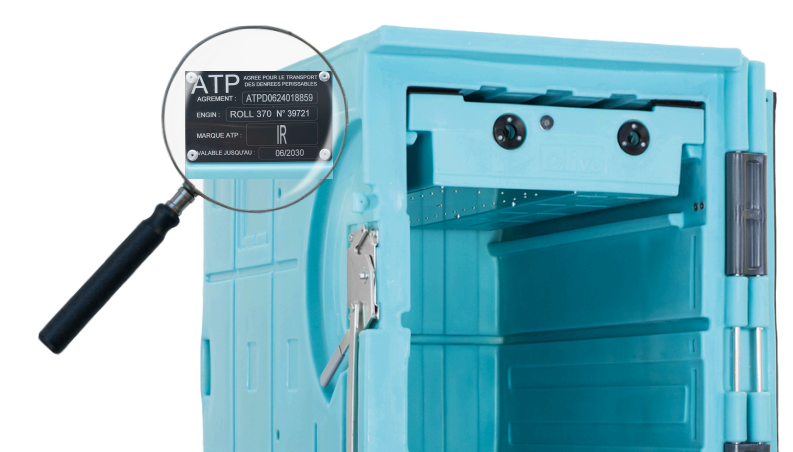
Step 5: Affix the ATP identification marking.
Certified equipment must be clearly marked with certification information (ATP class, certificate number, expiration date).
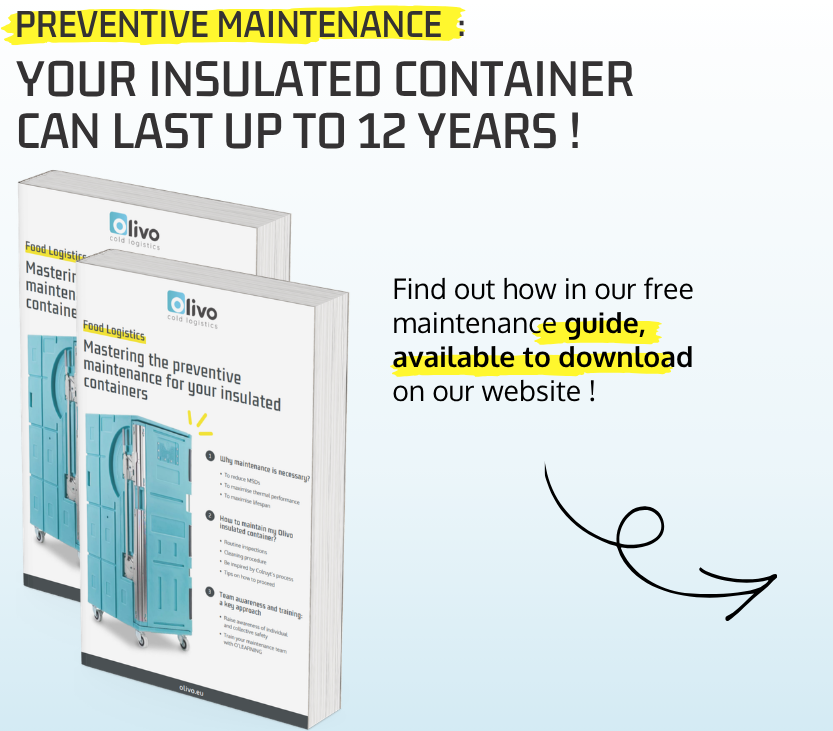
ADDITIONAL RESOURCES – How to Ensure Compliance and Avoid Operational Downtime
Poorly maintained equipment can quickly jeopardize your ATP renewal process. Preventive maintenance is one of the most effective ways to maximize the chances of a successful certification renewal and maintain the long-term performance of your insulated container fleet.

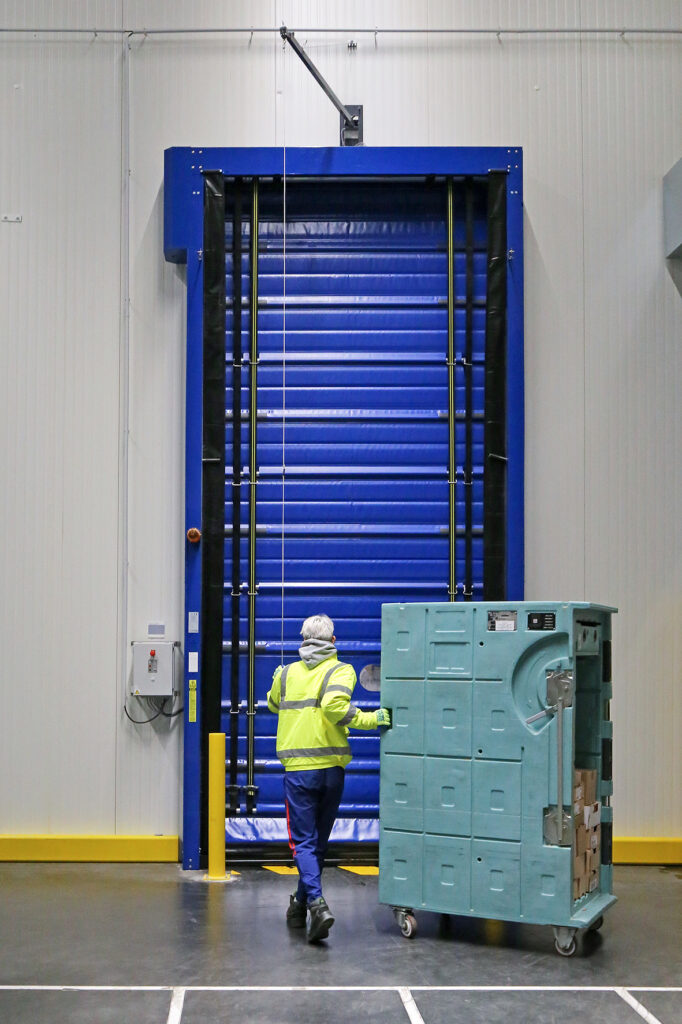
Ta violation of customs and sanitary regulations in the countries concerned. During roadside inspections, you may face:
For major food distribution operators holding certifications such as IFS (International Featured Standards) or BRC (British Retail Consortium), ATP non-compliance may also jeopardize their certification status and their commercial relationships with major retail chains.fication et leurs relations commerciales avec les grandes enseignes.
Insulated equipment with expired ATP certification may also, in practice, be equipment whose thermal performance has deteriorated to the point where it can no longer properly maintain product temperature. Polyurethane foam may have compacted or absorbed moisture, seals may be worn and panels may develop micro-cracks: all defects that may not visibly alter the container’s external appearance but significantly reduce its performance.
Without regular ATP testing, you therefore risk operating equipment you believe to be reliable while it silently exposes your products to temperature fluctuations that may become dangerous.
An increasing number of large-scale retail clients contractually require their suppliers and logistics providers to prove ATP compliance for all equipment. Non-compliance may therefore result in contractual penalties or, in extreme cases, termination of the contract.
ADDITIONAL RESOURCES – How to Ensure Compliance and Avoid Operational Downtime
Poorly maintained equipment can quickly jeopardize your ATP renewal process. Preventive maintenance is one of the most effective ways to maximize the chances of a successful certification renewal and maintain the long-term performance of your insulated container fleet.
The first step for any logistics manager is to establish a complete inventory of the insulated equipment fleet, including for each unit:
This dashboard, regularly updated, enables you to plan renewals well ahead of deadlines and avoid emergency situations where non-compliant equipment is discovered the day before a major delivery.
The outcome of an ATP test directly depends on the condition of the equipment at the time of testing. A rigorous preventive maintenance program, regular inspection of seals, verification of insulation integrity, cleaning and decontamination of internal surfaces, is the best way to ensure your containers remain capable of passing certification.
In practice, carry out a complete visual inspection of each container before every high-demand season (autumn for holiday peaks, spring before summer) and after any incident likely to have damaged the equipment (impact, fall, exposure to extreme temperatures).
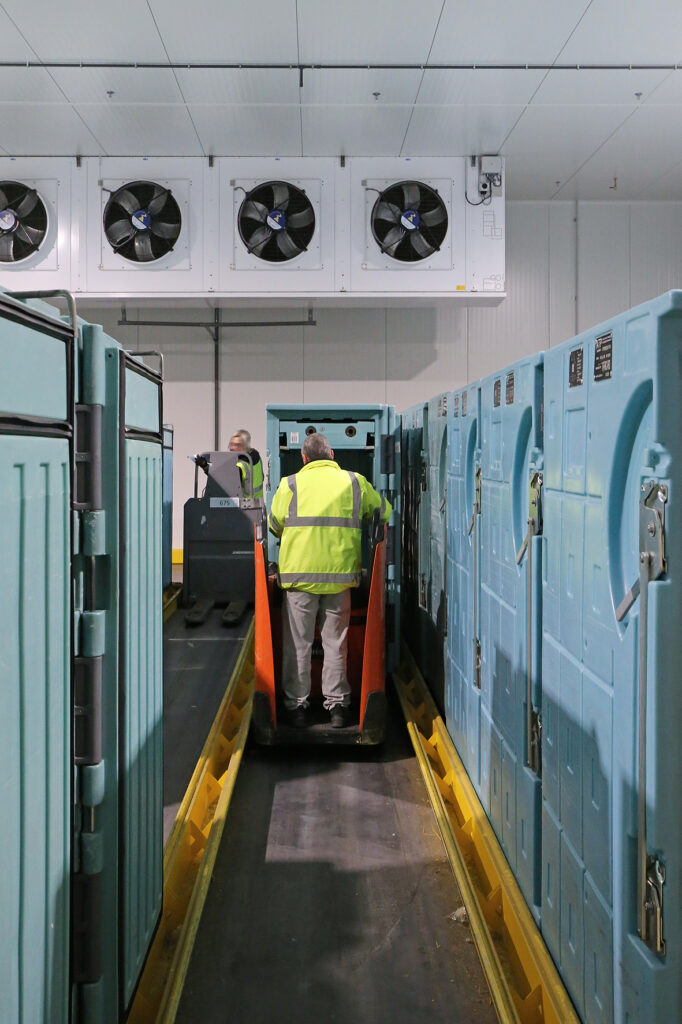
If you manage a large fleet of insulated containers (several dozen or several hundred units), ATP renewal management may represent a significant administrative and operational burden. Specialized service providers offer comprehensive support services including:
This outsourcing enables your logistics teams to focus on their core activities while ensuring continuous regulatory compliance of your fleet.
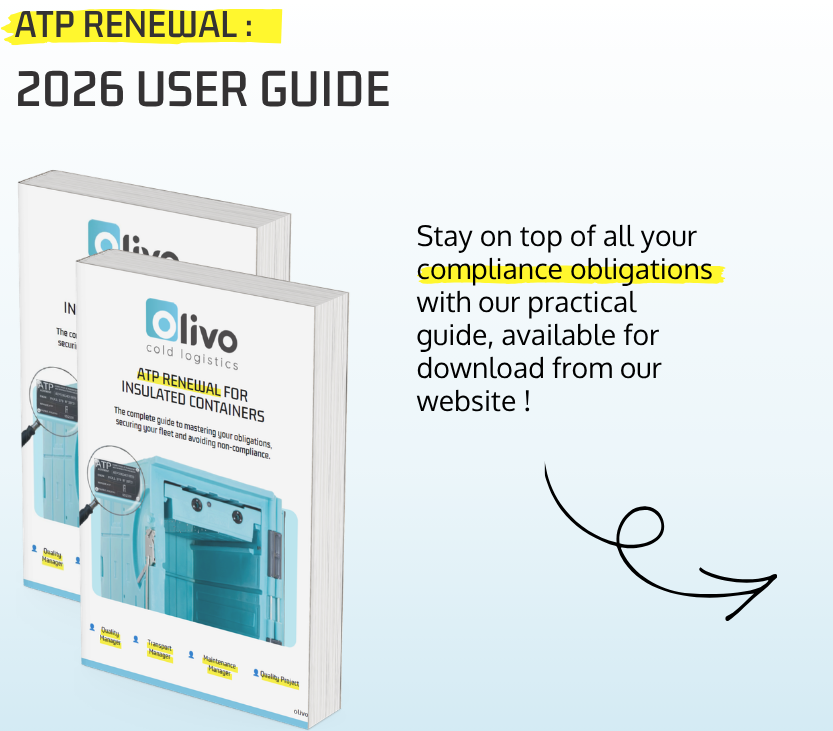
ADDITIONAL RESOURCES – How to Maintain Compliance and Avoid Operational Disruptions
An ATP certification deadline that is not anticipated can quickly disrupt your operations: equipment may be taken out of service, goods may be rejected, audits may be compromised, and customer relationships may be put at risk.
When an insulated container approaches ATP renewal and its overall condition is deteriorating, the question arises: is it better to renew certification or replace the equipment? Several criteria should guide your decision:
Train your teams on the importance of ATP certification and on the practices that preserve equipment performance: carefully closing doors and hatches, avoiding impacts, and immediately reporting any damage. This is an investment with a direct return.
Implement a systematic inspection procedure each time equipment is dispatched: visual inspection of container condition, confirmation that certification remains valid, and verification of the condition and charge level of eutectic plates.
Document every incident that may have affected equipment performance (drop, impact, exposure to extreme heat) and initiate a compliance inspection before putting the equipment back into service.
INFORMATIONS
Not sure where to start ?
Talk to an Olivo expert to assess your insulated container fleet and get a clear picture of its current condition.

For any food distribution operator, managing ATP renewal of insulated equipment is not merely an administrative task: it is a key component of regulatory compliance, product safety and customer trust. Investing time and resources into proactive ATP certification management through a rigorous tracking dashboard, regular preventive maintenance and a partnership with an expert equipment provider is the best way to protect your business from the risks of non-compliance.
Olivo offers a complete ATP renewal support service for food distribution and cold chain logistics operators. Our team supports you from fleet auditing through to obtaining new certificates. Contact us to learn more.
Do you need more information or would you like to talk to our teams about your project ?

ZA Charles Chana
1 boulevard des Mineurs – CS 50019
42230 Roche-la-Molière

Tel : +33 (0)4 77 90 68 63
1 October 2026 by Edina GÁLFI
17 September 2026 by Edina GÁLFI
3 September 2026 by Edina GÁLFI