

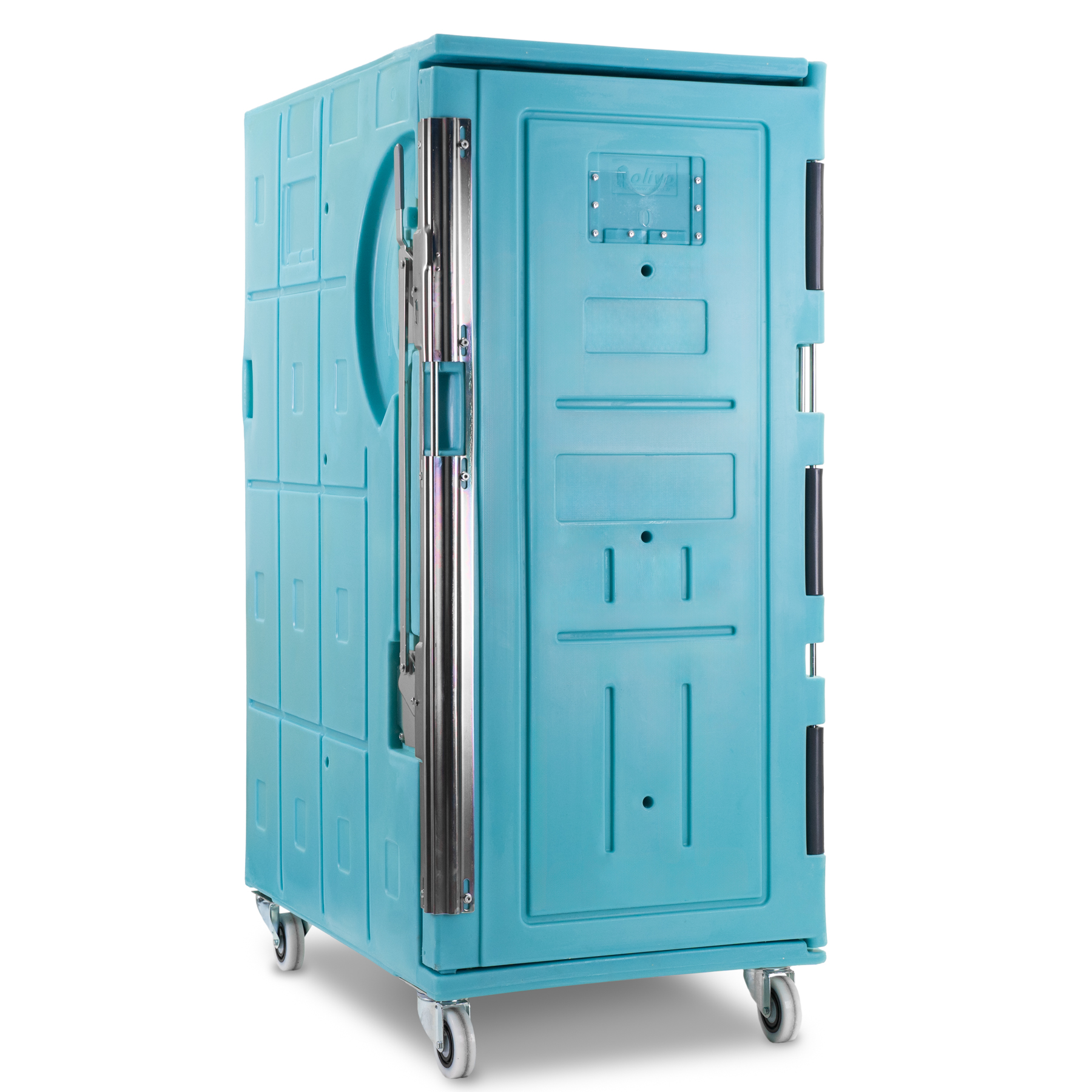

Ext. dim. : 800 x 1200 x 1860 mm,
Volume : 885 L,
Cold sources : eutectic plate TOP 900 et SiberSnow ®,
Logistics format : Euro-pallet 800 x 1200
View detailsWhen you start looking into the price of an insulated container, you quickly fall into a fairly classic trap: comparing raw numbers, the way you might compare the price of two cars without looking at the engine, fuel consumption or warranty period.
In professional cold chain logistics, a catalog price tells only a tiny part of the story. What really matters is what that container will cost over five, six, sometimes twelve years of daily use. Between the listed price and the total cost of ownership, there is a gap that many supply chain decision-makers discover too late.
The factors that make the bill vary are numerous, sometimes obvious, sometimes far more subtle than you’d imagine: format, materials, insulation level, regulatory certification, cold source, options, and above all the level of service that accompanies the equipment throughout its life.
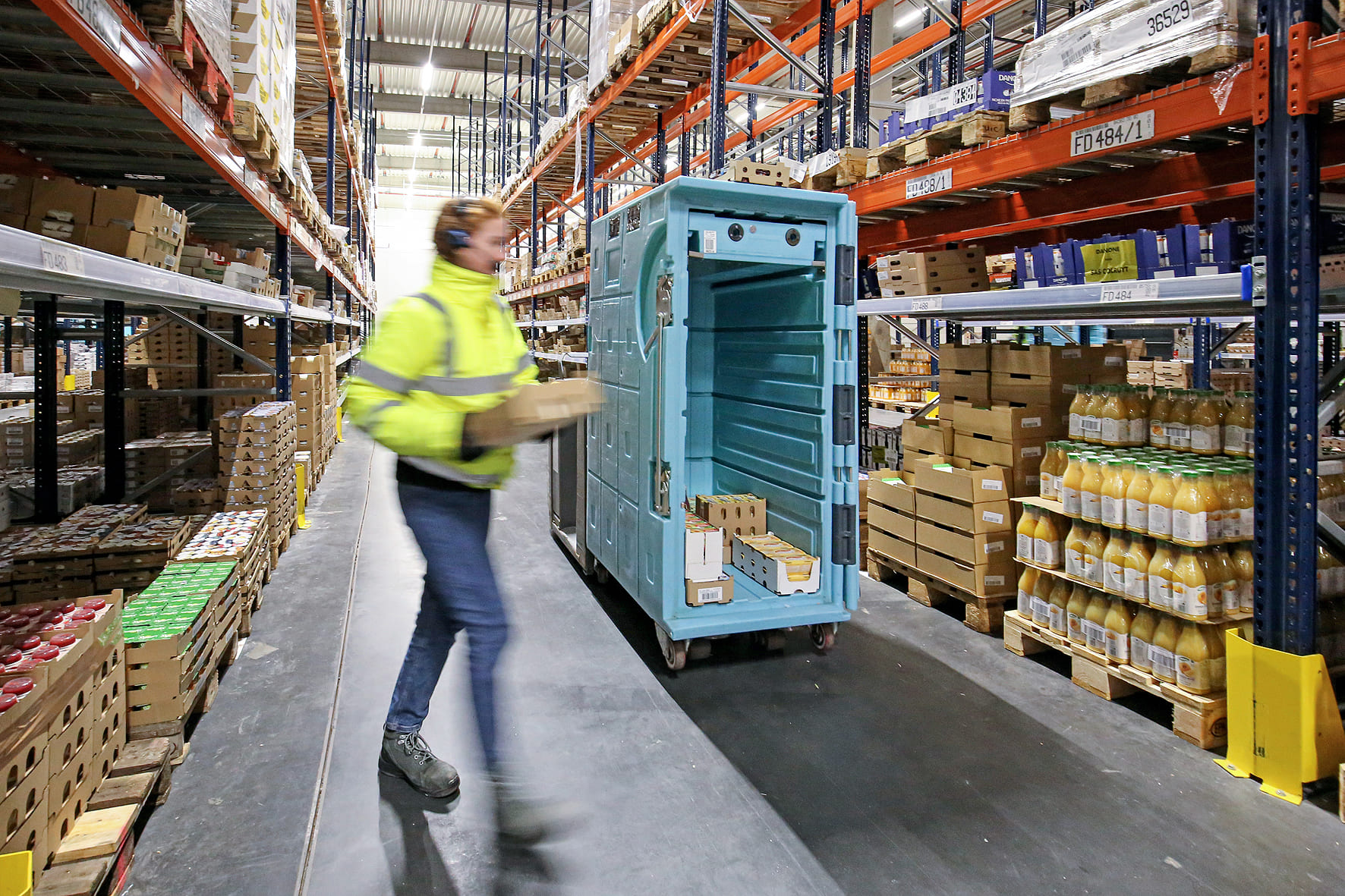

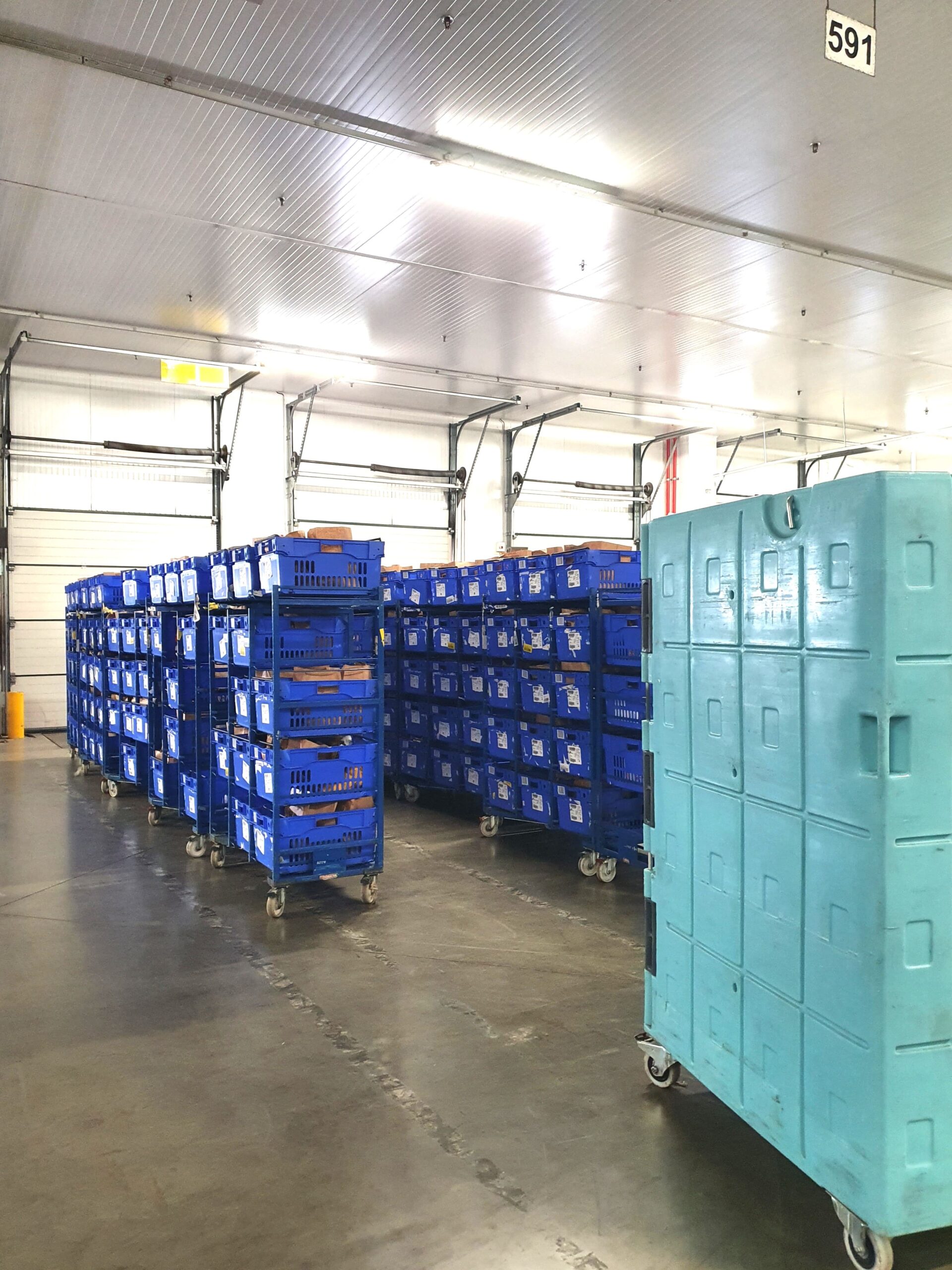
An insulated container, in its simplest definition, is an enclosure designed to maintain a controlled temperature for a set period of time, without using an on-board refrigeration unit. No motor, no compressor, no continuous electrical connection. The principle rests on the quality of the thermal insulation and on the passive cold source that goes with it, whether eutectic plates or cryogenic solutions.
You find it everywhere. In food distribution, where it handles transport between warehouses and points of sale. In institutional catering, where central kitchens use it to deliver thousands of meals every day via cold-chain distribution. In healthcare, for transporting sensitive pharmaceutical products. And in industrial cryogenics, for very specific applications that demand extreme temperature maintenance. Each sector has its own level of requirements, and each level of requirements has its impact on the budget.
Ext. dim. : 800 x 1200 x 1860 mm,
Volume : 885 L,
Cold sources : eutectic plate TOP 900 et SiberSnow ®,
Logistics format : Euro-pallet 800 x 1200
View details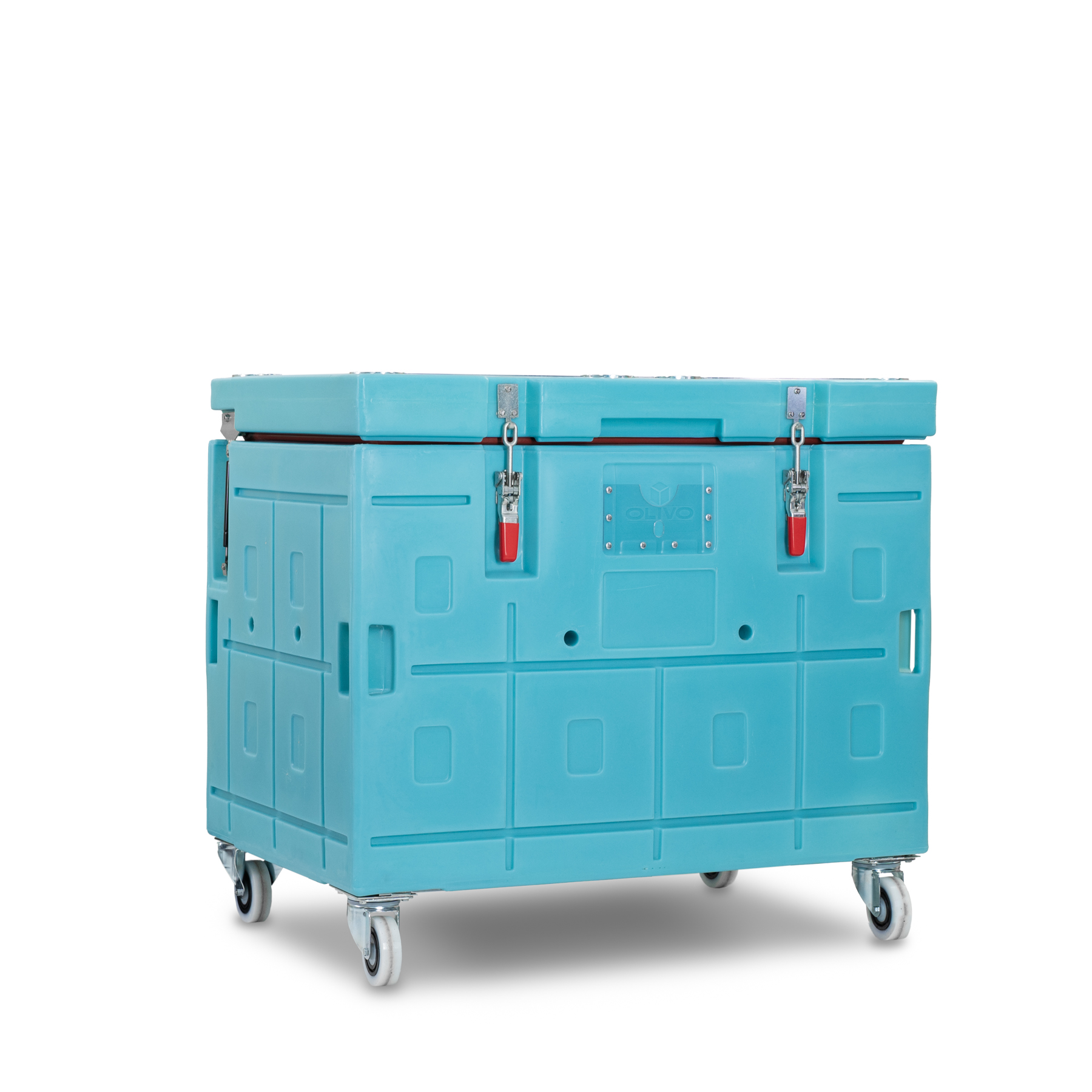
Ext. dim. : 1200 x 800 x 1085 mm,
Volume : 417 L,
Cold source : eutectic plate TOP 900,
Logistics format : Euro-pallet 800 x 1200
View details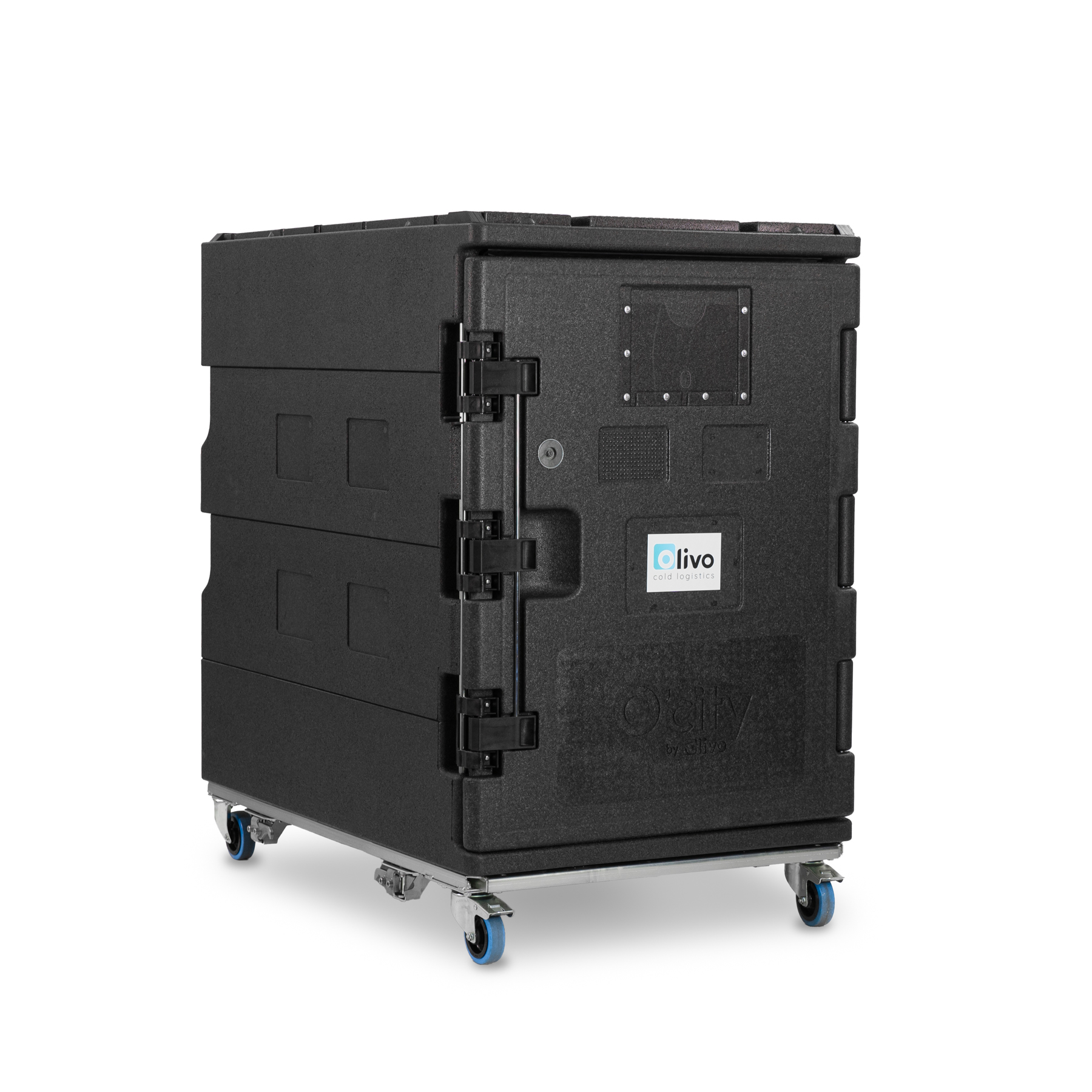
Ext. dim. : 800 x 1200 x 1270 mm,
Volume : 516 L,
Cold source : eutectic plate TOP 900,
Logistics format : Euro-pallet 800 x 1200
View details
Here is a subject many specifications skim over, even though it is absolutely central. Two containers of identical dimensions can deliver radically different thermal performance. And that difference has a price.
First, the thickness of the insulating panels. The thicker the insulation, the better the resistance to heat transfer, but the higher the material cost, and the larger the external volume for the same usable capacity. The nature of the insulation matters too: high-density injected polyurethane doesn’t perform the same as standard foam, and its production cost is higher.
The K coefficient, which measures the enclosure’s ability to limit heat exchange, is the key indicator here. The lower the K, the better the container performs. But this reasoning must be followed through to the end: a strong K coefficient also means longer cold autonomy, more flexible rotations, and regulatory compliance that is easier to maintain over time.
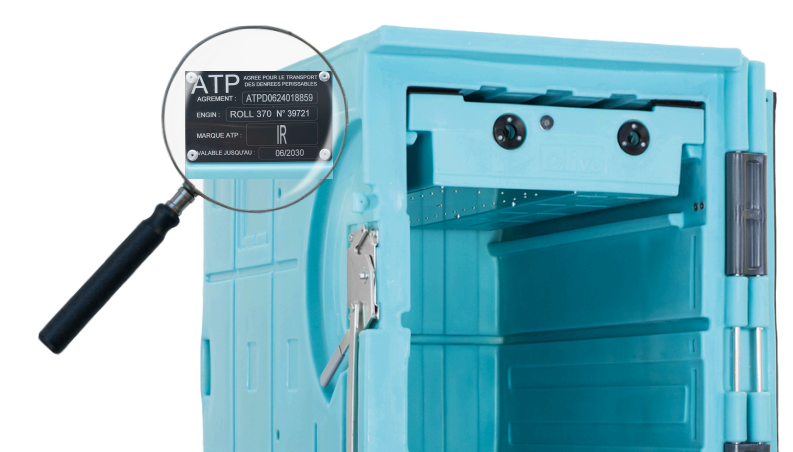
This is precisely where ATP certification comes in. A container certified under the Agreement on the Transport of Perishable Foodstuffs has undergone standardized testing at an official station. Its insulation performance is guaranteed, documented and legally enforceable. This certification has a cost, but it provides regulatory security and credibility that professionals in the food and healthcare sectors simply cannot do without.
Here we touch on what makes the difference between a container that will last three years and one that will last seven or twelve in intensive use. Materials are not a trivial cost item, and the trade-offs made here directly determine the longevity of the investment.
Rotomolded polyethylene offers remarkable resistance to impacts and moisture while remaining relatively light. Injected polyurethane forms the insulating core of most high-performance professional containers. Stainless steel is used on parts exposed to high mechanical or sanitary stress, at a significantly higher material cost. Some manufacturers incorporate technical composites to optimize the weight-to-strength ratio.
The question is never simply “which material is cheapest?” It is: which material will withstand real-world conditions of use? A container is handled daily on a loading dock, exposed to impacts, temperature variations and high-pressure washing. Robustness in real conditions is what separates a cheap container that will soon need replacing from industrial equipment that amortizes comfortably over years.
The insulated container alone does not produce cold. It preserves it. And the cold source paired with it is a budget item in its own right, to be factored in from the earliest planning stage.
Eutectic plates are the most widespread solution in professional cold chain logistics. Recharged in a cold room or a dedicated station, they release the accumulated cold throughout the delivery round. Their initial investment is moderate, their service life is long, and their recurring cost of use is low. It’s an investment-based economic model well suited to regular, predictable rotations.
Cryogenic solutions, such as CO₂ snow produced by expansion of liquid CO₂, meet needs for more intense cooling power or dual-temperature constraints. The SIBER SYSTEM®, for example, makes it possible to produce cold on site without depending on cold room infrastructure. The technological investment is higher, but the operational gains in certain logistics configurations can be considerable.
The key takeaway is that you cannot separate the price of the container from that of its cold source. One without the other makes no functional sense. And the trade-off between eutectic plates and cryogenic solutions depends as much on the thermal specifications as on the structure of the logistics flows.
A “basic” insulated container rarely exists in operational reality. Professionals have specific constraints, and these constraints translate into options, each of which adds a layer of functional value and an additional budget item.
Then come reinforced closing systems, heavy-duty casters, ergonomic handles designed for frequent handling, custom branding in the company’s colors. Each option meets a concrete operational need. And each option has a price.
The right approach is to distinguish the options that are essential for the actual use case from the “comfort” options that could be postponed. Well-constructed specifications help avoid both costly over-specification and under-equipment, which generates operational overcosts down the line.
INFORMATIONS
Are you hesitating between several insulated container solutions ?
Talk to an Olivo expert to analyze your current use and operational issues.

The ATP, Agreement on the International Carriage of Perishable Foodstuffs, is a European regulation that strictly governs the conditions of temperature-controlled transport. It applies to any vehicle or transport equipment used to carry perishable goods, whether fresh or frozen food products or certain healthcare products.
For the professionals concerned, and there are many, ATP compliance is not a “nice to have.” It is a legal obligation. An uncertified container used for temperature-controlled transport exposes the company to penalties, non-compliance during inspections, and above all a health risk whose consequences can be far more costly than a higher purchase price.
Obtaining and maintaining ATP certification involves several cost items that the container’s price necessarily includes. First, the design itself must meet precise technical requirements for insulation performance. Then, each model must undergo testing at an officially approved station, with standardized protocols and rigorous technical documentation. This process has a real industrial cost.
But there is one aspect many forget to include in their calculations: renewal. ATP certification has a limited validity period. After six years, and then every three years, the equipment must be recertified. This periodic renewal represents a recurring cost that absolutely must be factored into the cost of ownership over the container’s entire service life. A manufacturer that offers support with ATP renewal saves its clients time, administrative complexity and, often, money.
This is probably the most structural point in this entire discussion, and yet it is the one least often raised in budget conversations. An industrial-quality insulated container, built with robust materials and designed for intensive use, regularly exceeds six years of use in real professional conditions. Some well-maintained equipment goes beyond that.
Let’s take a concrete example. A container bought for 2,000 euros that lasts three years costs about 1.80 euros per day. A container bought for 3,500 euros that lasts seven years comes to 1.37 euros per day. The second is 75% more expensive to buy, but 24% cheaper to use. This kind of calculation radically changes the perspective when you manage a fleet of dozens or hundreds of containers.
As a supply chain manager at Delhaize in Serbia put it: “The product is good. The product’s service life exceeds 6 years. The eutectic plates are also effective and robust.” When a major European retailer confirms the longevity of equipment based on field experience, that’s an indicator that carries weight.
An insulated container lives. It works, takes knocks, undergoes thermal cycles, is washed, handled, stacked. Preventive maintenance, as mundane as it may seem, is what makes the difference between equipment that keeps its promises over time and equipment that deteriorates prematurely.
The cost of regular maintenance is always lower than the cost of replacement. It’s a basic industrial principle, yet it is often overlooked in budget decisions. Checking seals, inspecting the integrity of insulating panels, replacing wear parts (casters, hinges, closing systems): these are modest interventions that significantly extend the life of the whole unit.
And this is where a criterion rarely mentioned in tenders takes on its full importance: the availability of spare parts and the equipment’s actual repairability. An integrated manufacturer, which designs and produces its own containers, controls the complete chain: it can supply parts, carry out repairs, and extend the equipment’s life.
It’s rarely discussed, and that’s a mistake. The end of life of an insulated container represents a cost, whether you manage it or ignore it. And in a context where environmental responsibility requirements grow stronger year after year, this item can no longer be treated as a detail.
Scrapping a container with no recovery stream means paying for the disposal of composite materials that don’t recycle easily through standard channels. Conversely, working with a manufacturer that builds end-of-life management into its offer means access to optimized recycling streams, material recovery, and sometimes reuse or reconditioning solutions.
The circular economy applied to insulated containers is not an abstract concept. It is a concrete lever for reducing total cost and a measurable CSR argument. A container whose end of life is anticipated from the design stage costs less to process when it leaves the fleet than a container nobody knows what to do with once it’s worn out.
A price is not just a product. It is also, and sometimes above all, what comes with it. Sizing advice before purchase. Support with ATP certification renewal. After-sales service capable of responding quickly. Training for field teams in the proper use and maintenance of the containers.
These services have a cost, and that cost is sometimes built into the container’s price, sometimes billed separately, sometimes simply absent from the offer. But their absence has a price too, often far higher than you’d think. A poorly sized container generates waste or non-compliance. A poorly anticipated ATP renewal immobilizes equipment. An untrained team wears out equipment prematurely.
When comparing two offers, it is essential to compare like for like. The lowest price is not always the cheapest. Sometimes it’s just the one with the most things removed from the quote.
This is a cost factor invisible in the container’s unit price, but highly visible in the overall logistics budget. A partner capable of rethinking flow organization, proposing load-sharing solutions, integrating multimodality into the transport strategy, or optimizing the sizing of the container fleet based on actual rotations, generates structural savings.
Take a telling example: the ability to manage tri-temperature transport in a standard truck, thanks to insulated containers, can avoid buying or leasing a multi-compartment refrigerated vehicle. This is exactly the type of solution a retailer like Colruyt deployed to streamline its cold chain logistics. The gain is not measured in the price of the container, but in the overall cost of the supply chain.
This type of optimization appears in no catalog. It comes from a dialogue between a manufacturer that understands logistics challenges and a client willing to rethink its flows. It’s the difference between buying a container and building a high-performance cold chain logistics ecosystem.
Before asking for a price, you need to know exactly what you’re asking for. And that’s often where things go wrong. Vague specifications produce incomparable quotes, default choices, and overcosts down the line.
The parameters to set are concrete. What target temperatures? Chilled goods between +2°C and +8°C, frozen at -18°C, or both in the same vehicle? What volumes to transport per rotation? What rotation frequency and what temperature-holding time is required? What regulatory constraints, with or without ATP certification? What operating environment, maximum summer outdoor temperature, storage conditions between rounds, exposure to the weather?
Each parameter refines the actual need and enables accurate sizing. An oversized container costs too much to buy and takes up too much loading space. An undersized container fails to keep its thermal promises and exposes the company to cold chain breaks. Right-sizing is the exercise that separates a successful purchase from a regretted investment.
A standard price list, with prices by format and volume, can give a first order of magnitude. But it will never replace a personalized quote that takes into account the operational reality of the project.
The role of a manufacturer-partner is precisely to go beyond a simple product quote. It’s to analyze the need, challenge the specifications when necessary, propose alternatives the client hadn’t thought of, and optimize the balance between thermal performance, durability and budget. It’s a co-construction effort that requires listening, technical expertise and a detailed understanding of the client’s business constraints.
At Olivo, this approach reflects a conviction held since 1956: cold chain logistics is not about selling a container, it is built through a long-term partnership. A partnership that covers design, manufacturing, commissioning, maintenance, regulatory renewal and end-of-life management. Because the true price of an insulated container is the one measured over its entire service life, not the one on the first line of a purchase order.
The price of a professional insulated container should be read the way you read an industrial investment: factoring in performance, durability, regulatory compliance, associated service and end-of-life cost. The factors that make it vary are numerous, from format and materials to ATP certification and the supplier’s level of support. But the most structural criterion remains total cost of ownership. Robust, well-sized equipment, backed by an expert manufacturer able to support its clients throughout the product’s life, almost always costs less than a seemingly economical solution that wears out, gets replaced and is managed in a rush. Choosing a partner that masters the entire chain, from design to recycling, lays the foundations for cold chain logistics that is high-performing, compliant and responsible.
3 September 2026 by Edina GÁLFI
2 July 2026 by Edina GÁLFI
2 June 2026 by Edina GÁLFI