


How do you get the best value for money in a professional insulated container ?
1 October 2026 by Edina GÁLFI
3 September 2026 by Edina GÁLFI
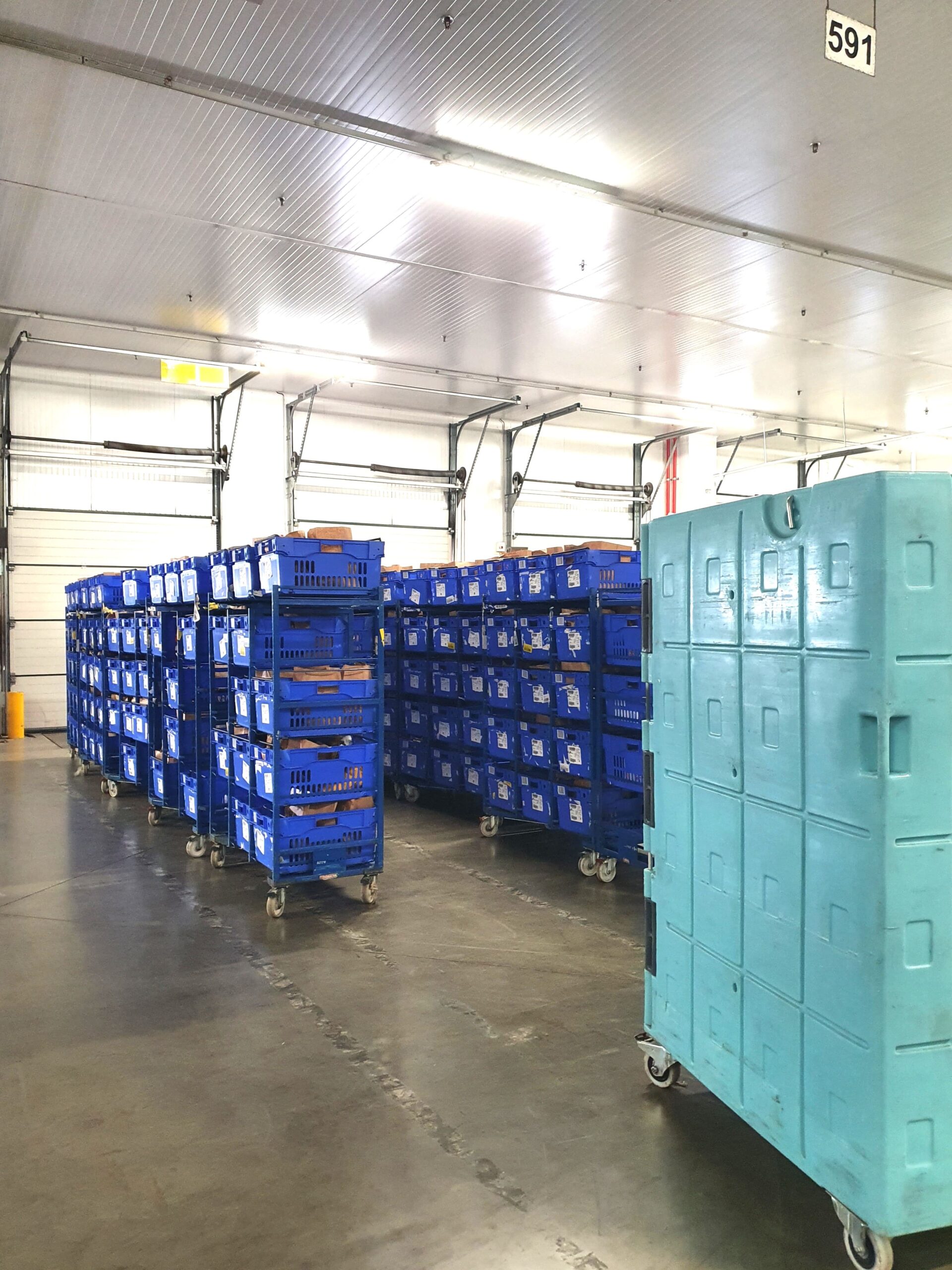
Delivering meals to care home residents at the correct temperature is both a regulatory obligation and a mark of respect. Whether meals travel from a central production kitchen to multiple care homes or are transported between floors and annexes within a single site, any break in the cold chain puts vulnerable people at risk. Yet many operators still rely on improvised insulation or outdated equipment that cannot guarantee consistent thermal performance across a full delivery round.
This guide examines the specific cold chain challenges faced by care home caterers in the UK, the regulatory framework that governs meal temperature, and how purpose-built isothermal containers can turn a daily logistical headache into a reliable, compliant process.
Care home residents are disproportionately vulnerable to foodborne illness. Age-related immune decline, chronic conditions and medication regimes all reduce the body’s ability to fight pathogens that multiply rapidly when food sits in the danger zone between 8 °C and 63 °C. A listeria or salmonella incident in a care home can be devastating, both for residents and for the operator’s reputation.
The challenge is compounded by the logistics of the sector itself. Unlike a restaurant that plates and serves within minutes, care home catering often involves:
Every one of these stages introduces a potential failure point. The container is the last physical barrier between controlled production and safe consumption.
Food businesses delivering to care homes must comply with the Food Safety and Hygiene (England) Regulations 2013 (and their equivalents in Scotland, Wales and Northern Ireland), which transpose EU Regulation (EC) No 852/2004 into domestic law. HACCP principles remain the cornerstone: operators must identify critical control points in the delivery chain and demonstrate that temperature is monitored and maintained.
In practice, this means:
The Care Quality Commission (CQC) also scrutinises nutrition and food safety during inspections. A care home that cannot evidence a robust meal delivery cold chain risks regulatory action, poor inspection ratings and, ultimately, the wellbeing of its residents.
For operators transporting perishable goods by road, the ATP agreement (Agreement on the Transport of Perishables) sets international standards for insulated and refrigerated transport equipment. ATP certification provides independent, third-party proof that a container maintains the required temperatures for a defined duration, a level of assurance that no ad hoc solution can match.
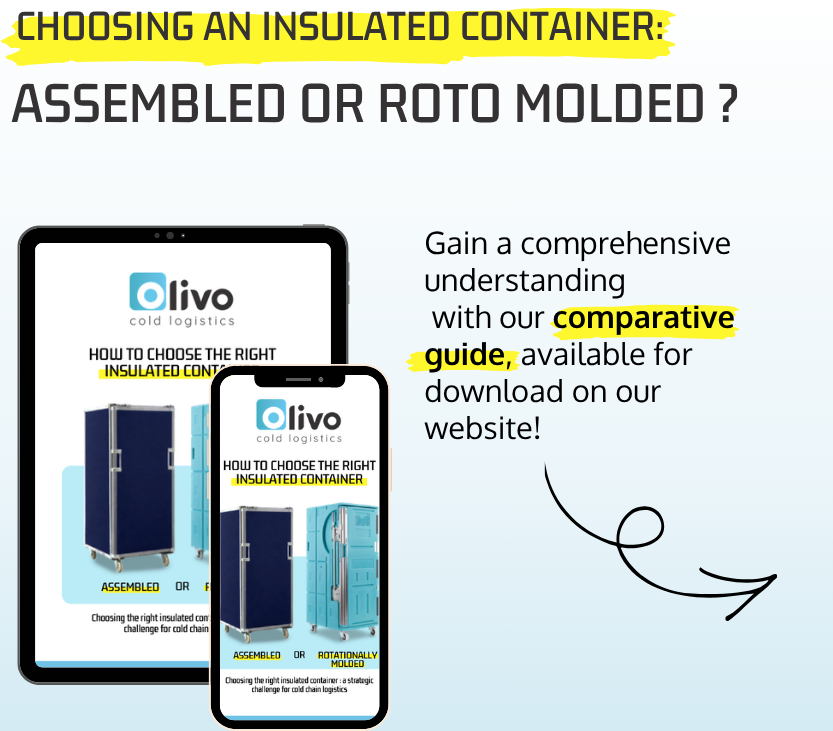
To support this reflection, a benchmark study offers a comparative analysis of insulated container technologies, based on logistics use cases and field constraints.

A container is only useful if it holds temperature for the entire journey, including loading time, traffic delays and the last drop. Passive insulation alone may suffice for short, single-stop runs. For multi-drop rounds lasting two hours or more, containers paired with eutectic plates (rechargeable cold or heat accumulators) offer extended thermal autonomy without relying on an on-board refrigeration unit.
Care homes vary enormously in size, from twelve-bed residential homes to 120-bed nursing facilities. The right container format depends on meal volumes, vehicle type and handling constraints:
Containers used in care home catering face daily wash-down cycles. Smooth internal surfaces, food-safe materials and the absence of crevices where bacteria can harbour are non-negotiable. Equipment that degrades after repeated cleaning becomes a food safety liability.
Care home contracts often run for years. A container that needs replacing every eighteen months is a false economy. The total cost of ownership, purchase price plus maintenance, cleaning, repair and eventual disposal, should drive the procurement decision, not the unit price alone.
Since 1956, Olivo has designed and manufactured isothermal containers in France, with an integrated R&D centre dedicated to cold chain performance. As the leading French manufacturer of insulated containers, Olivo brings a depth of expertise that few suppliers in this sector can match.
Three product lines respond directly to the needs outlined above:
The ROLL range provides wheeled isothermal containers built for intensive daily use. Paired with eutectic plates, a ROLL container maintains target temperatures through multi-drop rounds without any powered refrigeration, reducing energy consumption and vehicle complexity at the same time.
The BAC range offers modular, stackable insulated bacs that let operators segregate chilled, hot and ambient items within a single load. For care home caterers managing mixed-temperature menus, this flexibility simplifies vehicle loading and protects each component independently.
The BOX range delivers rigid insulated caissons suited to longer delivery distances or rougher handling conditions, a practical choice for operators covering rural care home networks where journey times are less predictable.
All Olivo containers are designed for longevity. Client testimony from Delhaize in Serbia confirms product lifespans exceeding six years in daily commercial use, a figure that fundamentally changes the total cost equation compared to lightweight, short-life alternatives.
Beyond the product itself, Olivo provides a full lifecycle service: maintenance, ATP certification renewal, and end-of-life recycling. This circular approach means operators are not left managing obsolete equipment, and the environmental footprint of the cold chain is actively reduced over time.
INFORMATIONS
Are you hesitating between several insulated container solutions ?
Talk to an Olivo expert to analyze your current use and operational issues.

Choosing the right container is a critical step, but it sits within a broader operational framework. Care home caterers who achieve consistently safe delivery tend to share a few practices:
Pre-chill or pre-heat containers before loading. Even high-performance insulation works better when the container starts at the target temperature rather than at ambient.
Use eutectic plates matched to the load profile. An oversized plate in a half-empty container wastes energy; an undersized plate in a full container risks temperature drift on the final stops. Olivo’s technical team can help specify the right plate configuration for a given route.
Train care home receiving staff. The container’s thermal performance is compromised if a delivery is left unopened in a corridor for forty minutes. Clear handover protocols, including temperature checks at the point of receipt, close the last gap in the chain.
Record and review. Systematic temperature logging, whether manual or via data loggers, provides the audit trail that regulators expect and gives operators early warning of any process drift before it becomes a food safety incident.
Thermal autonomy depends on the container model, insulation thickness, ambient conditions and whether eutectic plates are used. Olivo ROLL and BOX containers paired with eutectic plates routinely maintain compliant temperatures for several hours, sufficient for multi-drop care home delivery rounds. Olivo’s technical team can validate performance for a specific route profile.
ATP certification applies to the international carriage of perishable foodstuffs and is recognised in the UK. Olivo containers can be supplied with ATP certification, and Olivo provides a renewal service to ensure equipment remains compliant throughout its operational life.
Separate containers or compartments should be used for hot and chilled items to prevent thermal interference. Olivo’s BAC range allows operators to load independent temperature zones within a single vehicle, each insulated bac maintaining its own target temperature with the appropriate eutectic plate.
Olivo manages end-of-life recycling as part of its lifecycle service, ensuring that retired containers are processed responsibly. This closed-loop approach supports operators’ sustainability commitments and aligns with growing regulatory expectations around waste and circular economy in the UK.
Equipping a care home catering operation with the right insulated containers is not a one-off purchase. It is the starting point of a process that involves route analysis, plate specification, staff training, maintenance scheduling and, eventually, responsible disposal. Olivo has accompanied food logistics professionals through this full cycle for nearly seventy years, combining French manufacturing expertise with a genuine commitment to making the cold chain more responsible and more reliable.
If you are reviewing your care home meal delivery equipment, or planning a new central kitchen operation, contact the Olivo team for a technical consultation tailored to your routes, volumes and regulatory requirements.
Do you need more information or would you like to talk to our teams about your project ?

ZA Charles Chana
1 boulevard des Mineurs – CS 50019
42230 Roche-la-Molière

Tel : +33 (0)4 77 90 68 63
1 October 2026 by Edina GÁLFI
17 September 2026 by Edina GÁLFI
3 September 2026 by Edina GÁLFI


